Writing Strokes Free School-to-Home Connection | Parent Note for Pre-Writing Skills

Writing
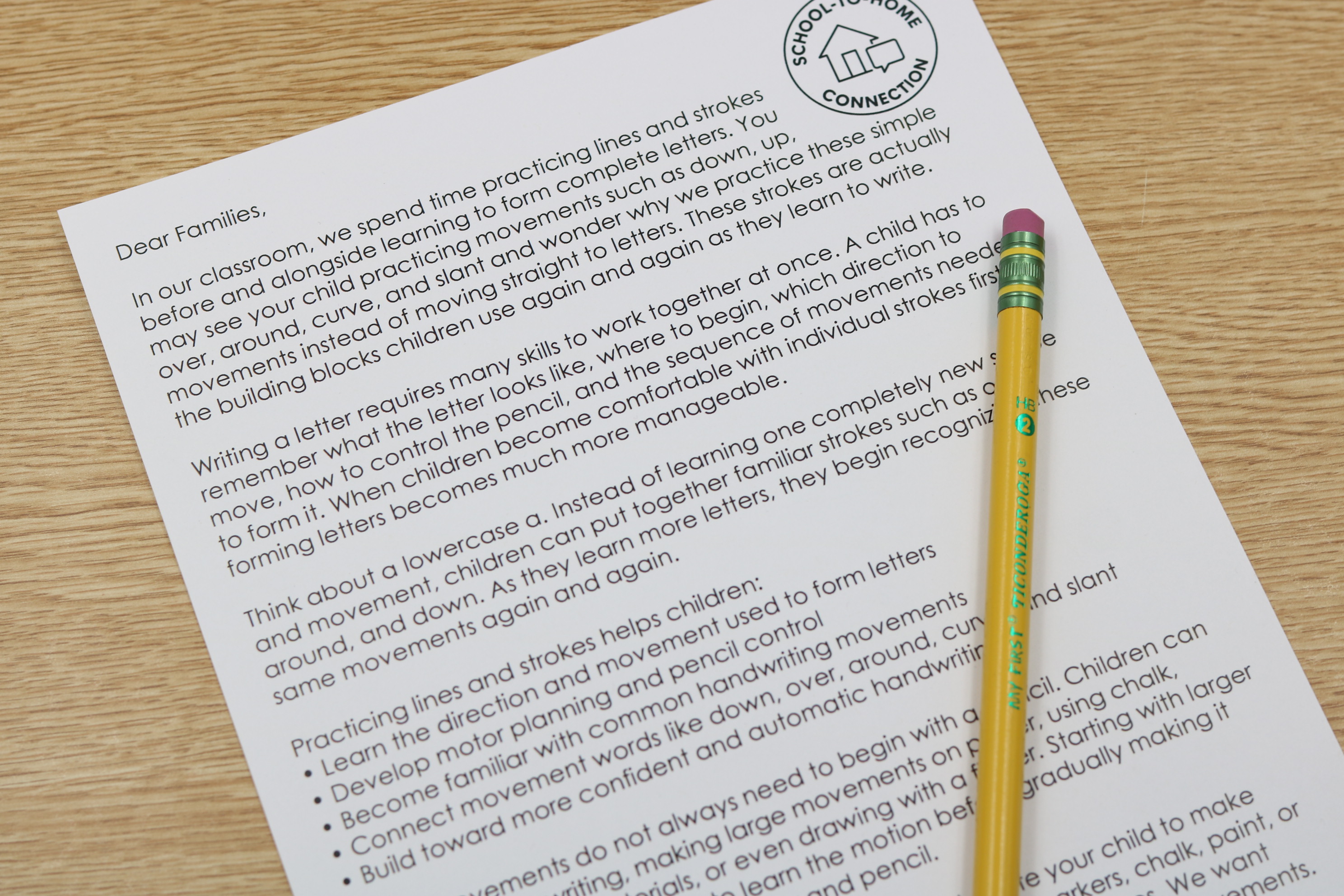
Help families understand why lines and strokes come before and alongside letter formation with this free Writing Strokes School-to-Home Connection! This parent-friendly note explains how movements like down, up, over, around, curve, and slant build the foundation for successful handwriting.
Help families understand the important handwriting work happening before children are confidently forming complete letters with this free Writing Strokes School-to-Home Connection! This ready-to-share family note explains why students practice individual lines and strokes before and alongside letter formation and how those simple movements become the building blocks of handwriting.
🛒 View the full set of School-to-Home Connections HERE.
The note walks families through the many skills involved in writing a letter. Children must remember what a letter looks like, know where to begin, move in the correct direction, control their pencil, and remember the sequence of movements needed to form it. By first becoming familiar with movements such as down, up, over, around, curve, and slant, students have familiar building blocks they can combine when forming letters.
Families are also given simple ways to reinforce writing strokes at home without turning practice into another worksheet. Children can skywrite, use chalk, make large movements on paper, trace in sensory materials, or practice lines and curves with crayons, markers, paint, sand, or shaving cream. The focus is not on creating perfect lines, but on helping children understand and become comfortable with the movements.
This School-to-Home Connection makes it easy to explain the why behind pre-writing strokes while giving families practical ways to support the same handwriting foundation at home.
What's Included:
Writing Strokes School-to-Home Connection
Parent-friendly explanation of pre-writing strokes
Information about why strokes are taught before and alongside letters
Examples including down, up, over, around, curve, and slant
Explanation of how strokes connect to letter formation
Benefits of stroke practice for motor planning and pencil control
Simple at-home writing stroke activities
Ideas for practicing without a pencil
Access to an editable version
Ideas for Use:
Family communication
Beginning handwriting instruction
Pre-writing instruction
Parent conferences
Preschool and kindergarten family education
Take-home folders
Classroom newsletters
Handwriting intervention support
School-to-home connections
Skills Covered:
Pre-writing strokes
Handwriting readiness
Letter formation foundations
Pencil control
Motor planning
Directionality
Stroke sequencing
Handwriting movement vocabulary
Writing confidence
Automaticity
Those simple lines and strokes are doing important work. This Writing Strokes School-to-Home Connection helps families see how early movement practice builds the control, planning, and confidence children need as they become successful writers.
Submit any requests/questions to littlemindsatworkLLC@gmail.com

Tara West is a dedicated educator and the founder of Little Minds at Work, an educational platform designed to provide teachers with creative and engaging resources for early childhood education. With a focus on developing innovative lesson plans, classroom strategies, and activities, Tara brings her passion for teaching to life, empowering teachers to foster meaningful learning experiences for their students.