If there is one thing I LOVE in a literacy center, it is an activity that students can complete independently and actually know whether they got it right!
Self-correcting centers give students immediate feedback without requiring an adult to check every response. Instead of completing an entire activity incorrectly and finding out later, students can compare their work as they go, make adjustments, and try again. That little bit of independence is HUGE during center time.
And today I have a completely FREE phonics center that does exactly that!
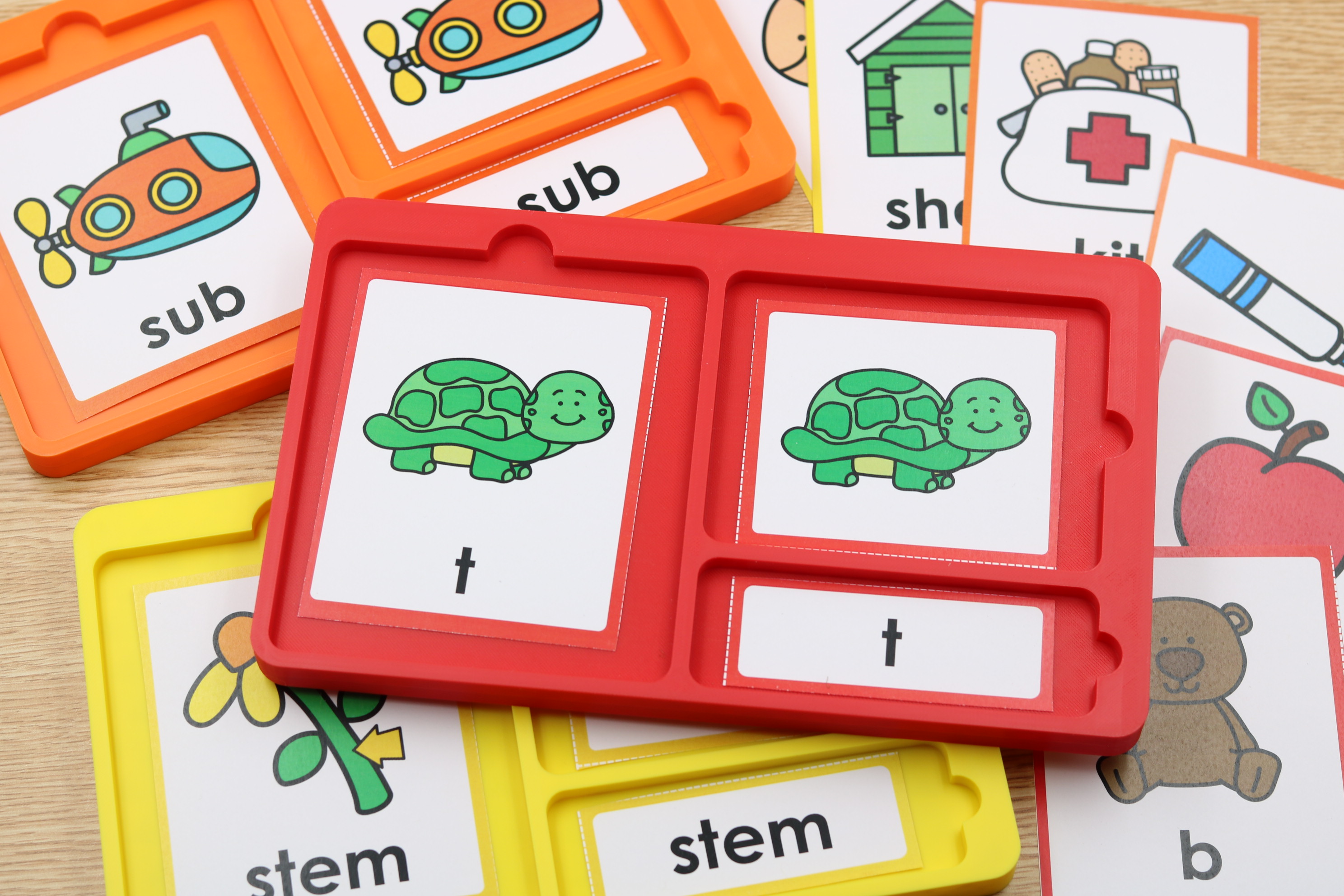
You can grab my Phonics 3-Part Self Correcting Cards FREEBIE, plus I am sharing a FREE 3D printing file for the 3-part sorting tray shown with the activity.
And don't have a 3D printer? No worries! The tray is a fun addition, but it is absolutely not necessary. These cards work just as well spread across a table, desk, or floor as a simple tabletop center.
Why Self-Correcting Centers Work So Well
During literacy centers, we want students practicing skills independently, but independence can be tricky when students aren't sure whether their answers are correct.
That is where a self-correcting format can be so helpful.
Rather than relying on a teacher to check each match, students have a visual model built directly into the activity. They can compare the pieces they selected to the completed reference card, giving them an opportunity to notice an error and correct it themselves.
For our youngest learners especially, this keeps the routine simple: look, match, check!
The predictable format also means that once students understand how the center works, you don't have to teach a brand-new set of directions every time you introduce a new phonics skill.
How the 3-Part Self-Correcting Cards Work
Each phonics set has three coordinating parts:
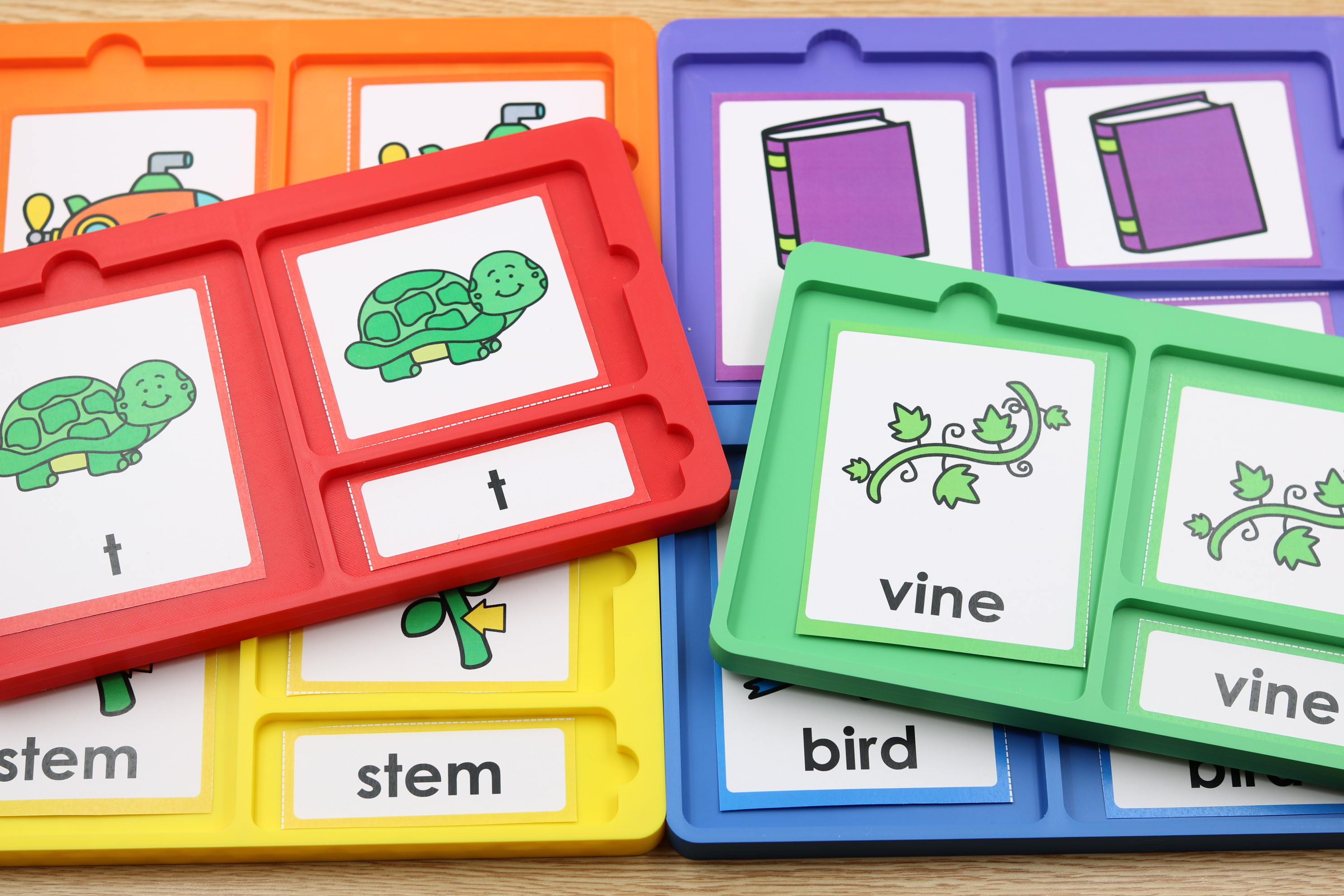
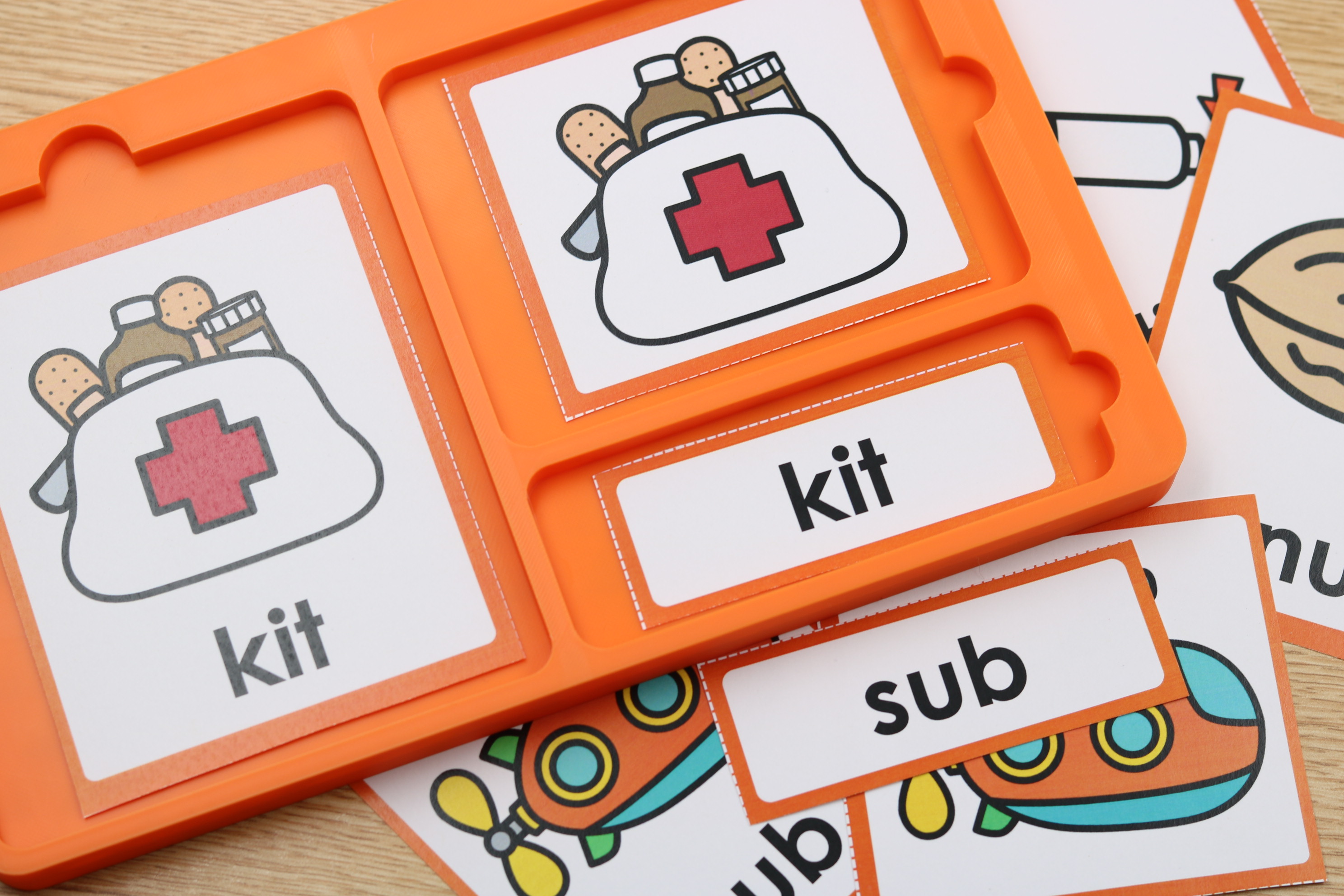
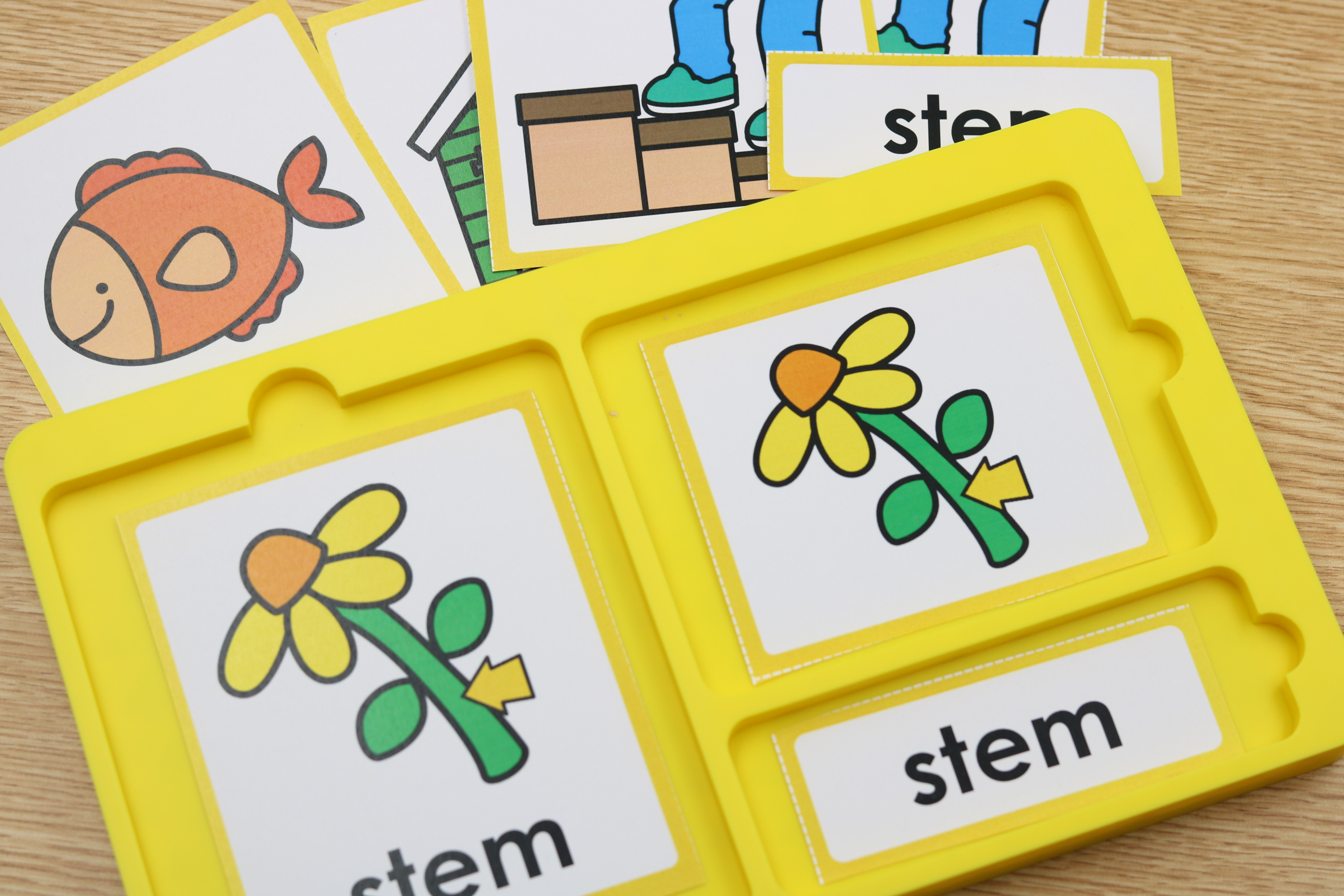
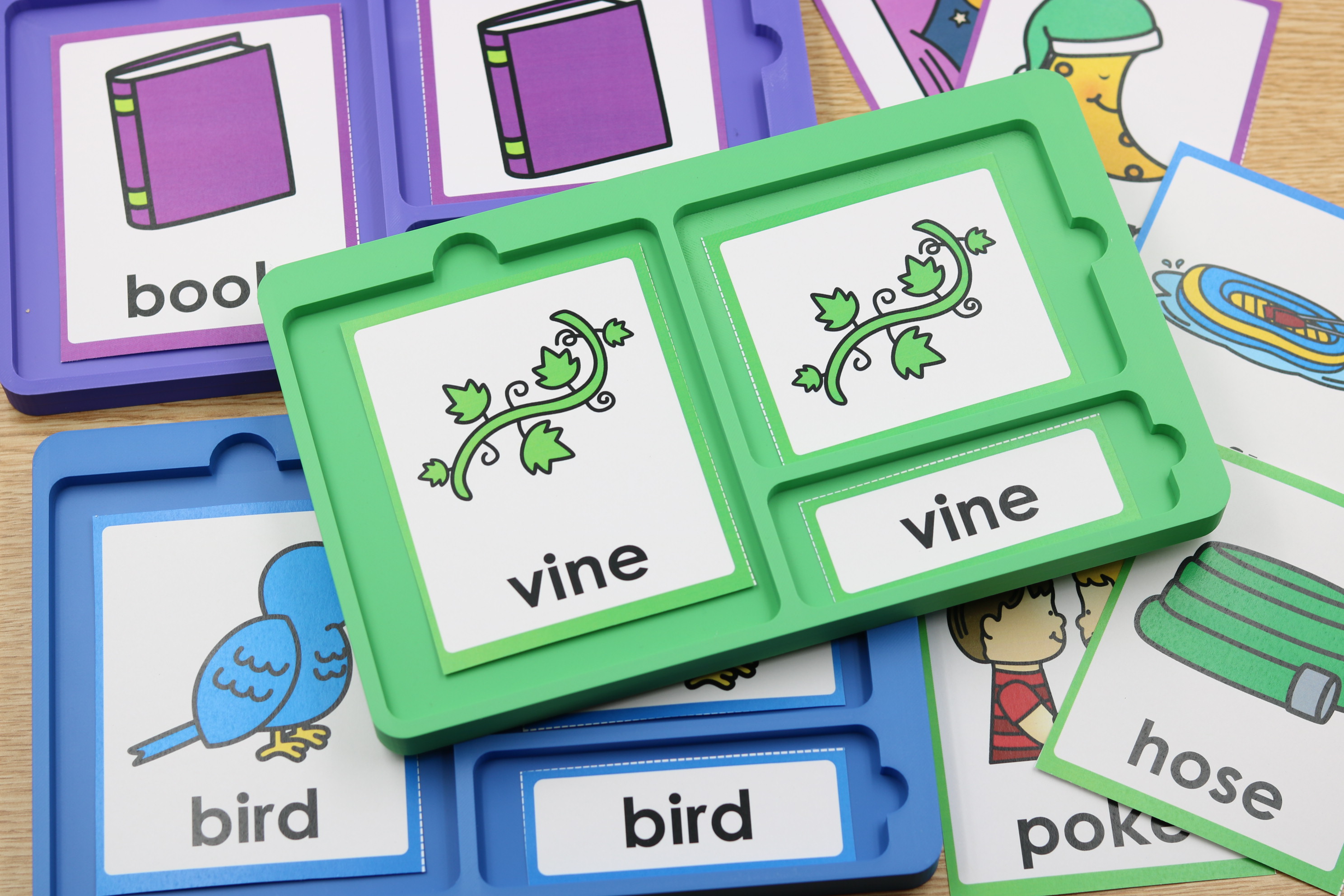
A complete reference card showing the picture and corresponding letter or word
An individual picture card
An individual letter or word card
Students first look at the complete reference card. Then, they find the matching individual picture and letter or word pieces to recreate the complete set.
Once all three pieces are together, students can compare their match directly to the reference card. That completed card essentially becomes their built-in answer key!
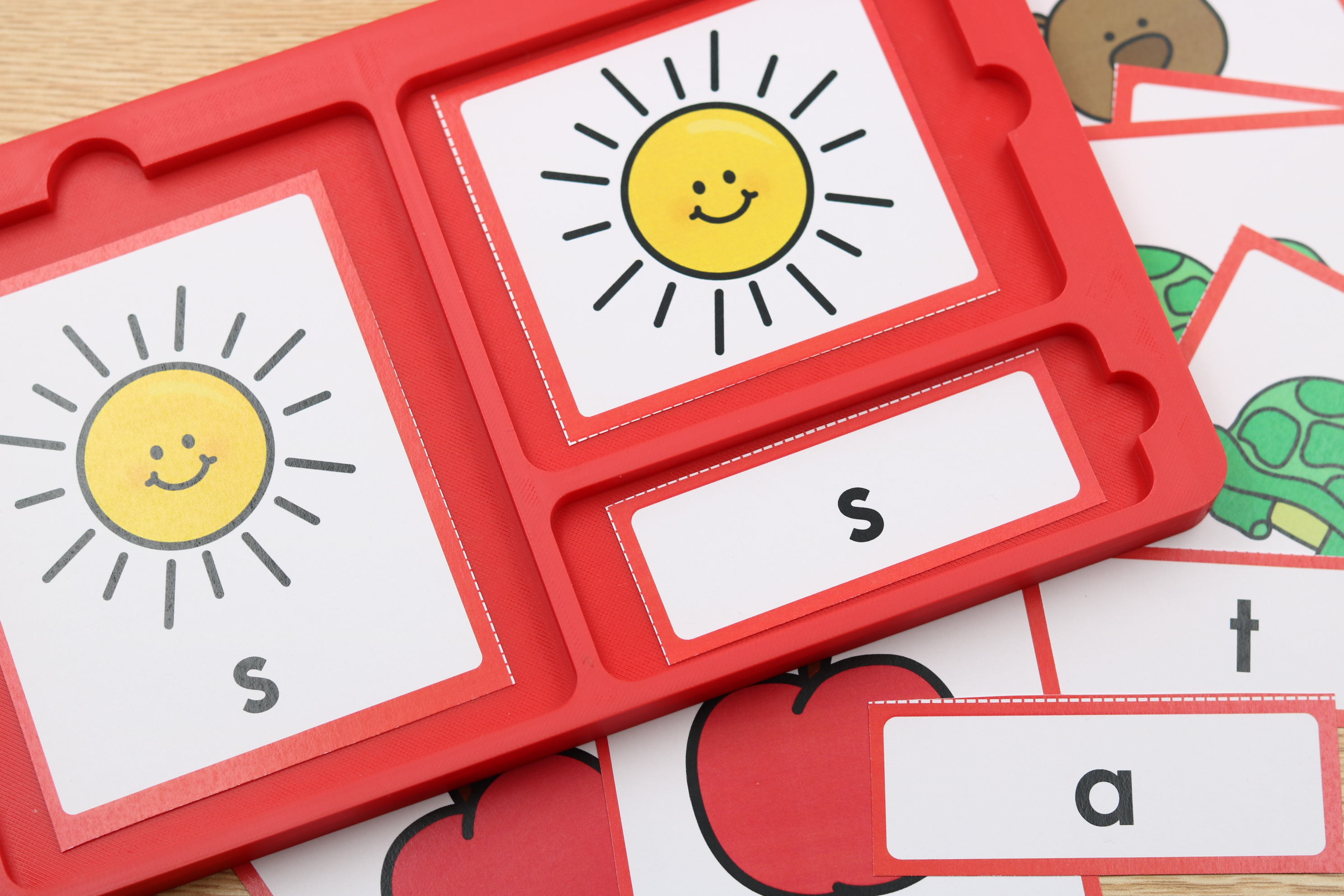
For example, during alphabet practice, students might see a completed card with a picture and the lowercase letter that represents its beginning sound. They find the matching picture card and letter card and place the three pieces together.
As students progress into decoding, the exact same routine continues with words. The format stays familiar while the phonics skill changes.
Add the FREE 3D-Printed Sorting Tray
Okay, now for the really fun part!
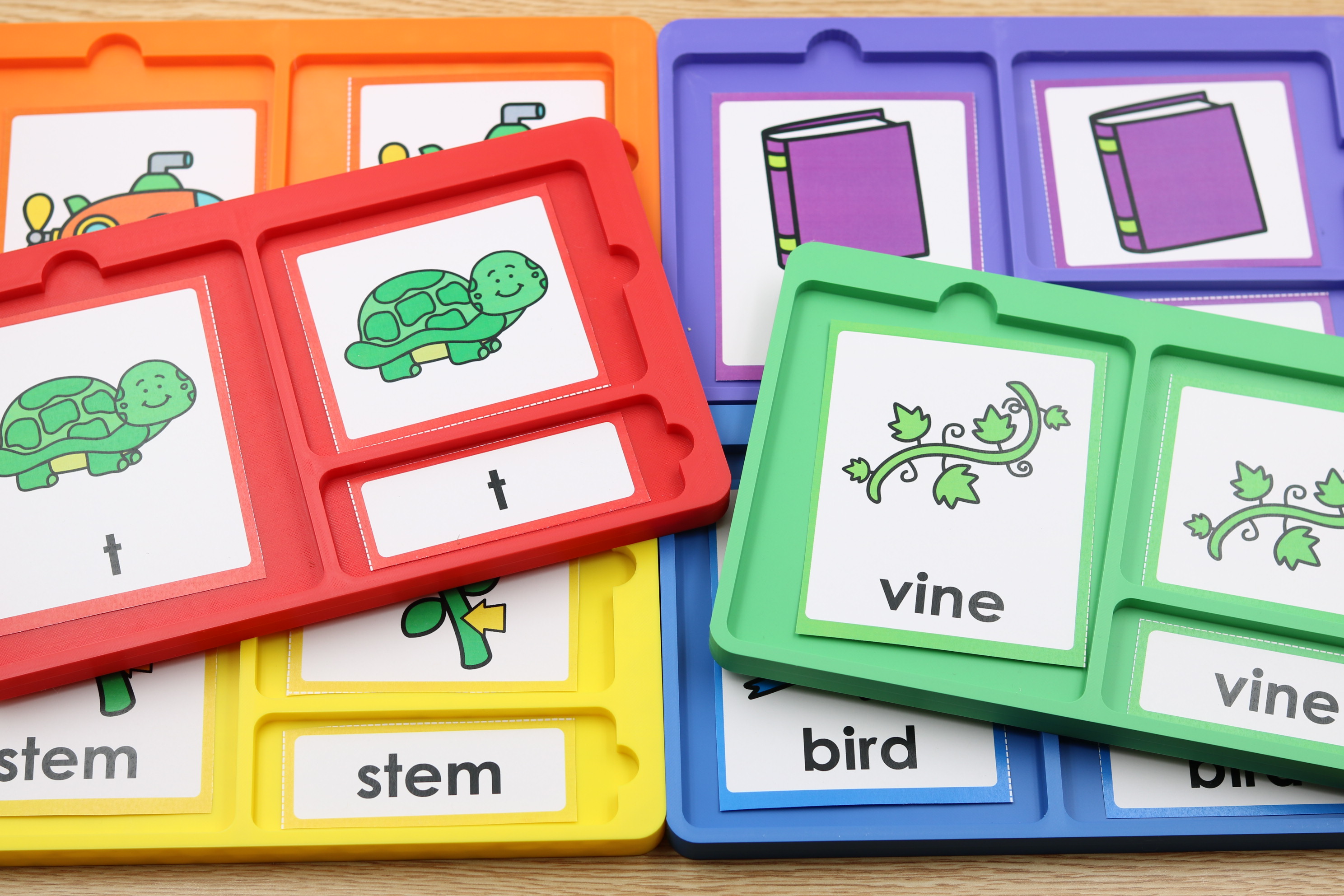
I LOVE these cards paired with a simple 3-part sorting tray. The completed reference card can sit in one section while students place the matching picture and letter or word pieces into the other two sections.
It creates a neat little workspace, keeps all three pieces contained, and makes the center feel extra hands-on.
I'm linking the FREE 3D print file for the sorting tray so you can print your own:
👉 FREE 3-Part Sorting Tray 3D Print File
Of course, you do NOT need the tray to use the freebie! Simply place the cards on a table or desk and have students build their three-part matches right on the surface. The learning and self-correcting component work exactly the same way.
One Center Routine You Can Use All Year
One of my favorite things about these cards is that they aren't tied to a season, theme, or single point in the school year.
They are skill-based, which means you can introduce the same familiar center again and again as students move through your phonics scope and sequence.
The free set includes practice with:
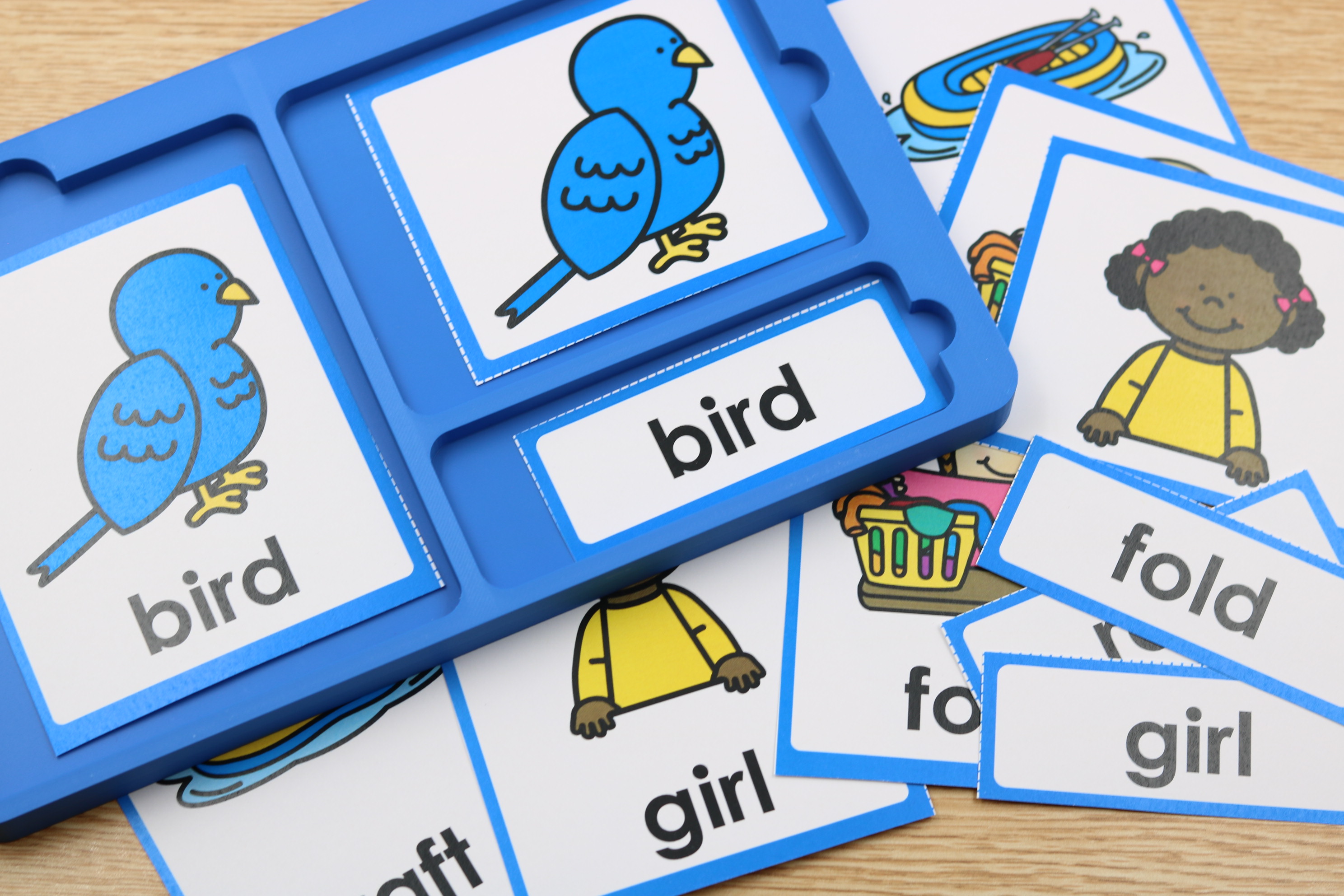
The phonics sections are also color-coded, making it easy to organize the cards and pull exactly what your students need.
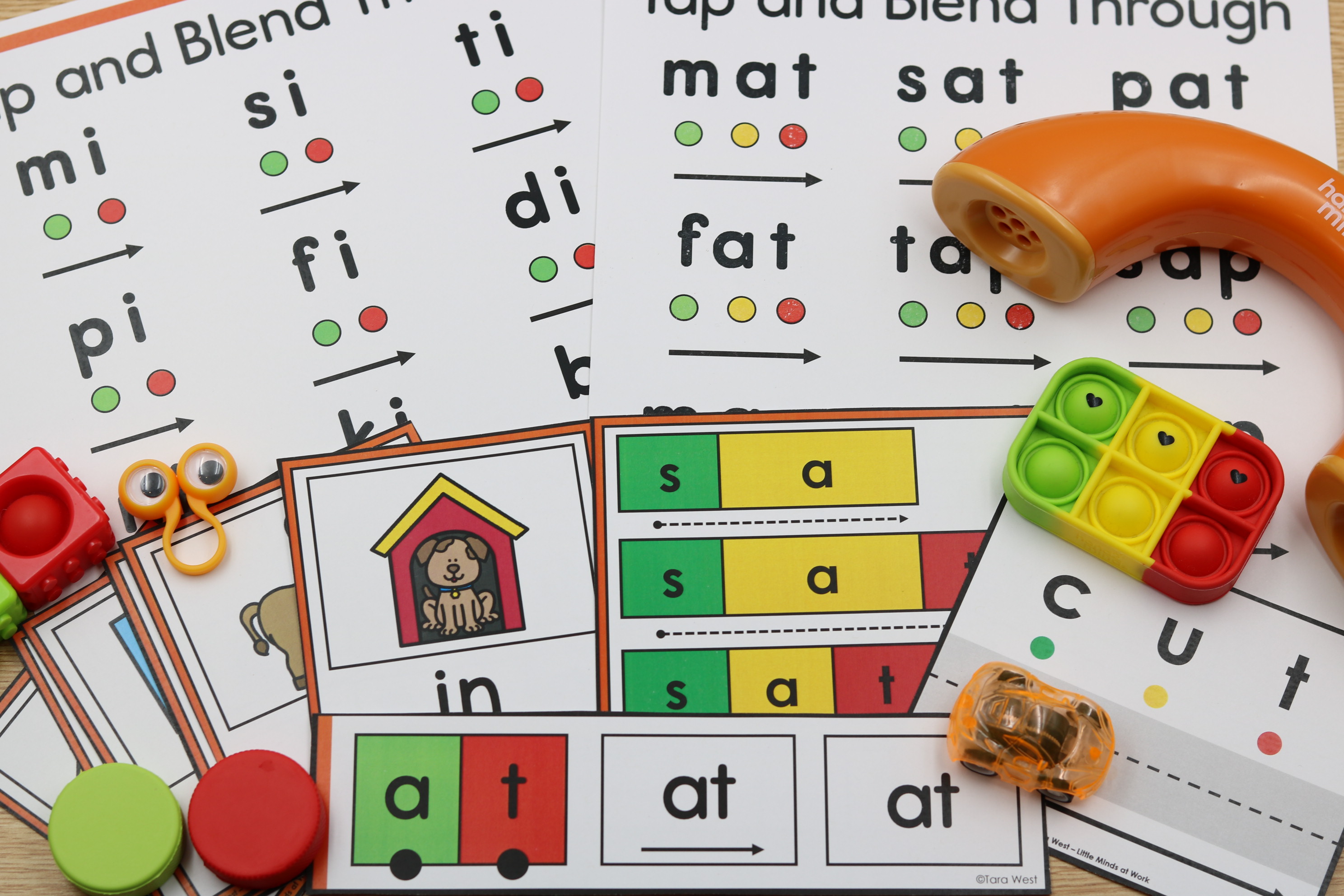
At the beginning of the year, you might have students working with alphabet cards. Later, you can swap those for CVC words. As students progress, bring out digraphs, blends, CVCE, CVCC, r-controlled vowels, and vowel variants.
Same center. Same directions. New skill.
That is the kind of center routine I love because students aren't spending their time learning how to do an activity. They already understand the routine, so their attention can stay focused on the phonics skill.
Easy Ways to Differentiate
The skill-based design also makes differentiation simple.
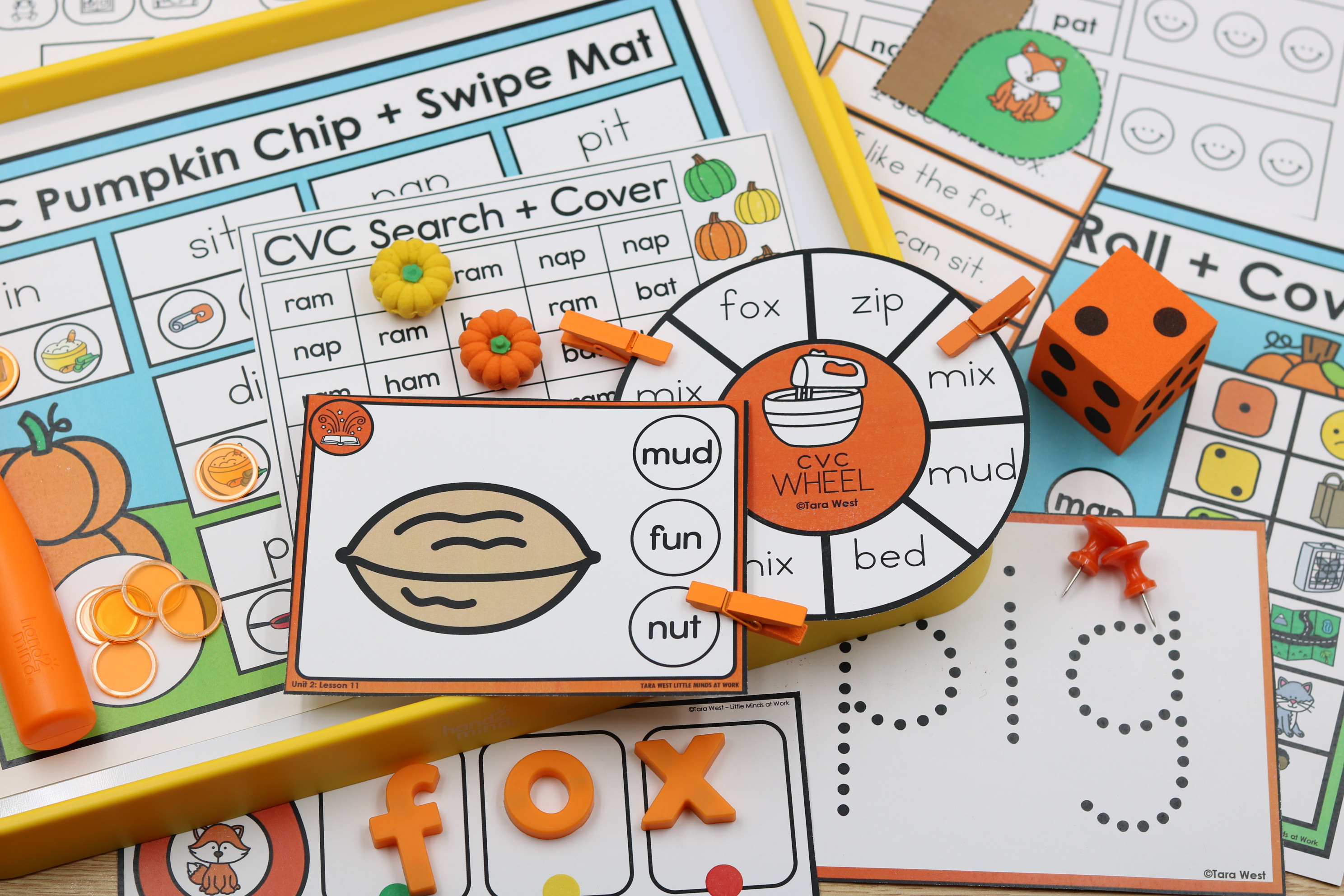
Not every student at your literacy center needs to be practicing the same phonics skill. One group may be working on CVC words while another is ready for digraphs or blends. You can pull the section that matches what each group is currently learning without changing the overall activity.
These cards can easily be used for:
Because the routine remains consistent, students can spend more of their energy actually reading, matching, and thinking about the phonics pattern in front of them.
Grab Both Freebies!
Ready to try it?
You can grab the FREE 75-page Phonics 3-Part Self Correcting Cards with skills ranging from alphabet recognition through vowel variants right here:
👉 Download the FREE Phonics 3-Part Self Correcting Cards
Then, if you have access to a 3D printer, grab the free sorting tray file to create the complete setup:
👉 Grab the FREE 3D Sorting Tray File
Print the cards, choose the phonics skill your students are working on, and you have a hands-on, self-correcting center you can keep coming back to all year long!
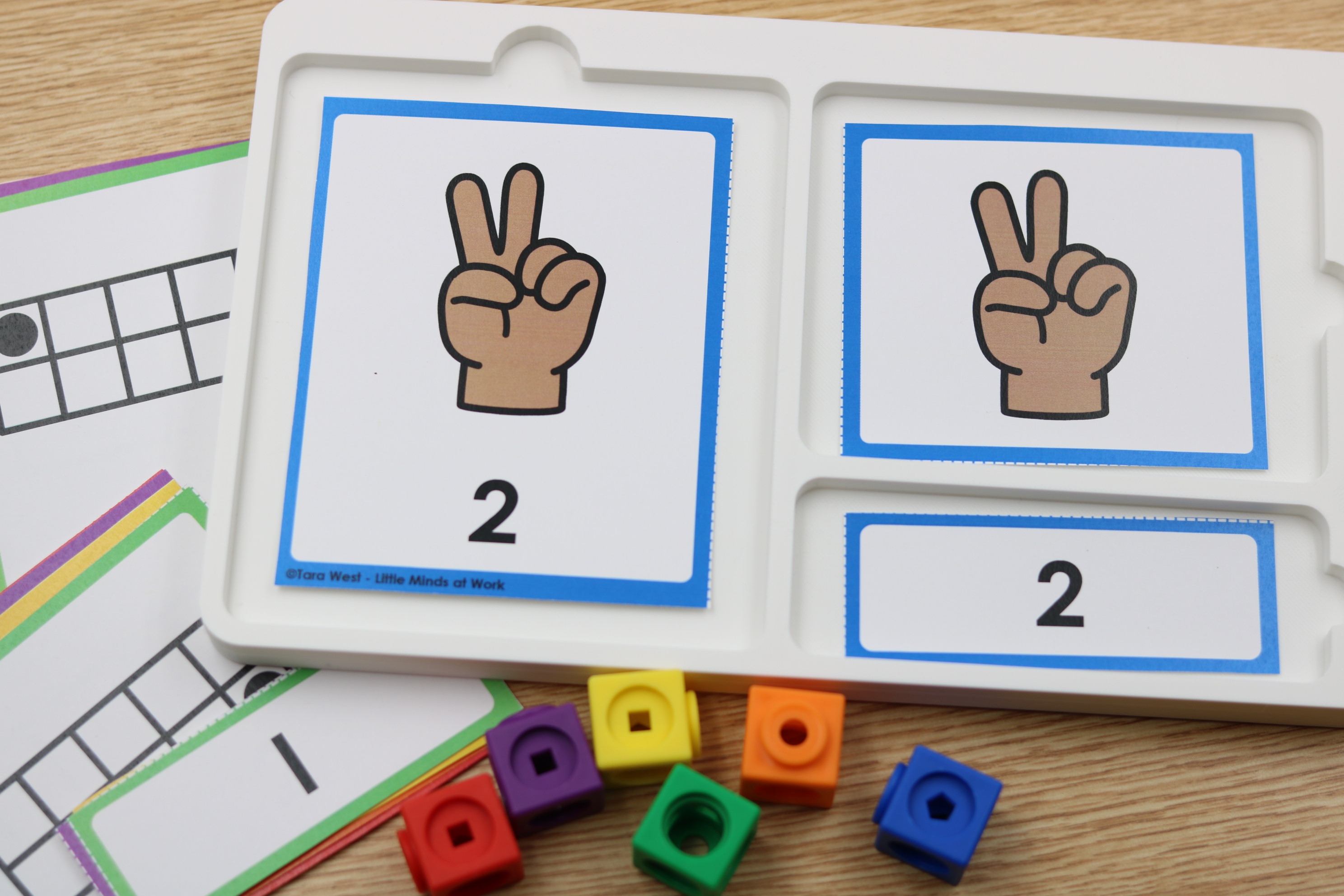
👉 Access a free BONUS set of number sense 3-part Self Correction Cards