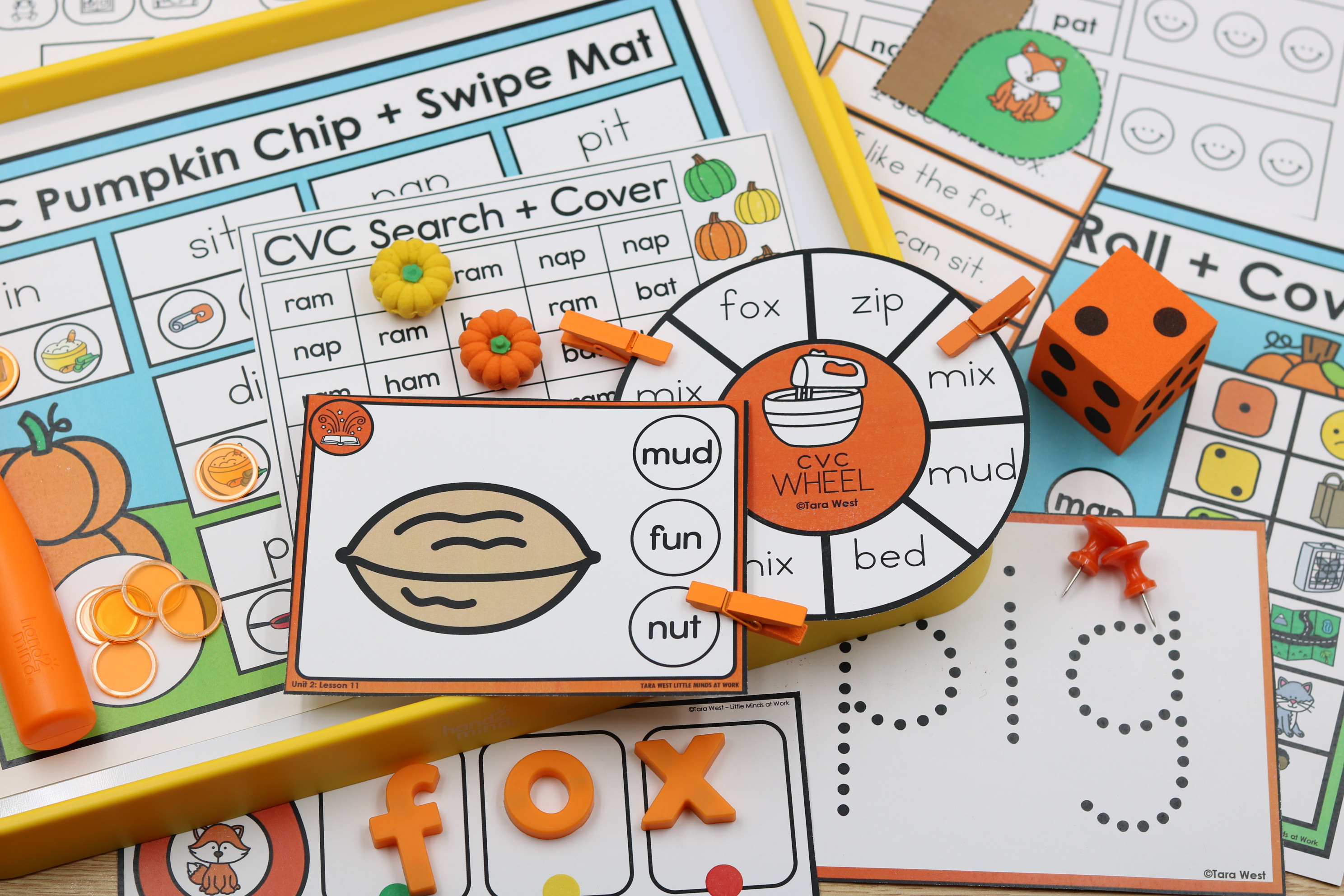
If there is one thing I know about teaching beginning readers, it is that learning letter sounds and learning to read words are two very different things! We spend so much time helping students recognize letters, produce their sounds, and build those important foundational skills. However, knowing individual sounds doesn't automatically mean students know how to connect those sounds to read words. That next step requires explicit instruction, consistent modeling, and plenty of opportunities for students to practice blending successfully.
Today, I'm sharing some of my favorite ways to make blending instruction easier, along with FREE blending activities you can use immediately in your classroom! Whether your students are just beginning to connect two sounds or are working toward reading CVC words more independently, these resources can help you provide the intentional practice they need.
Step One: Building a Strong Foundation With Letter Sounds
Before students can begin blending sounds to read words, they need a strong foundation in phonemic awareness and letter-sound correspondences. This starts with helping students understand that spoken words are made up of individual sounds that can be identified, isolated, and remembered. As we introduce letters, students also need explicit instruction in connecting each letter to the sound it represents.
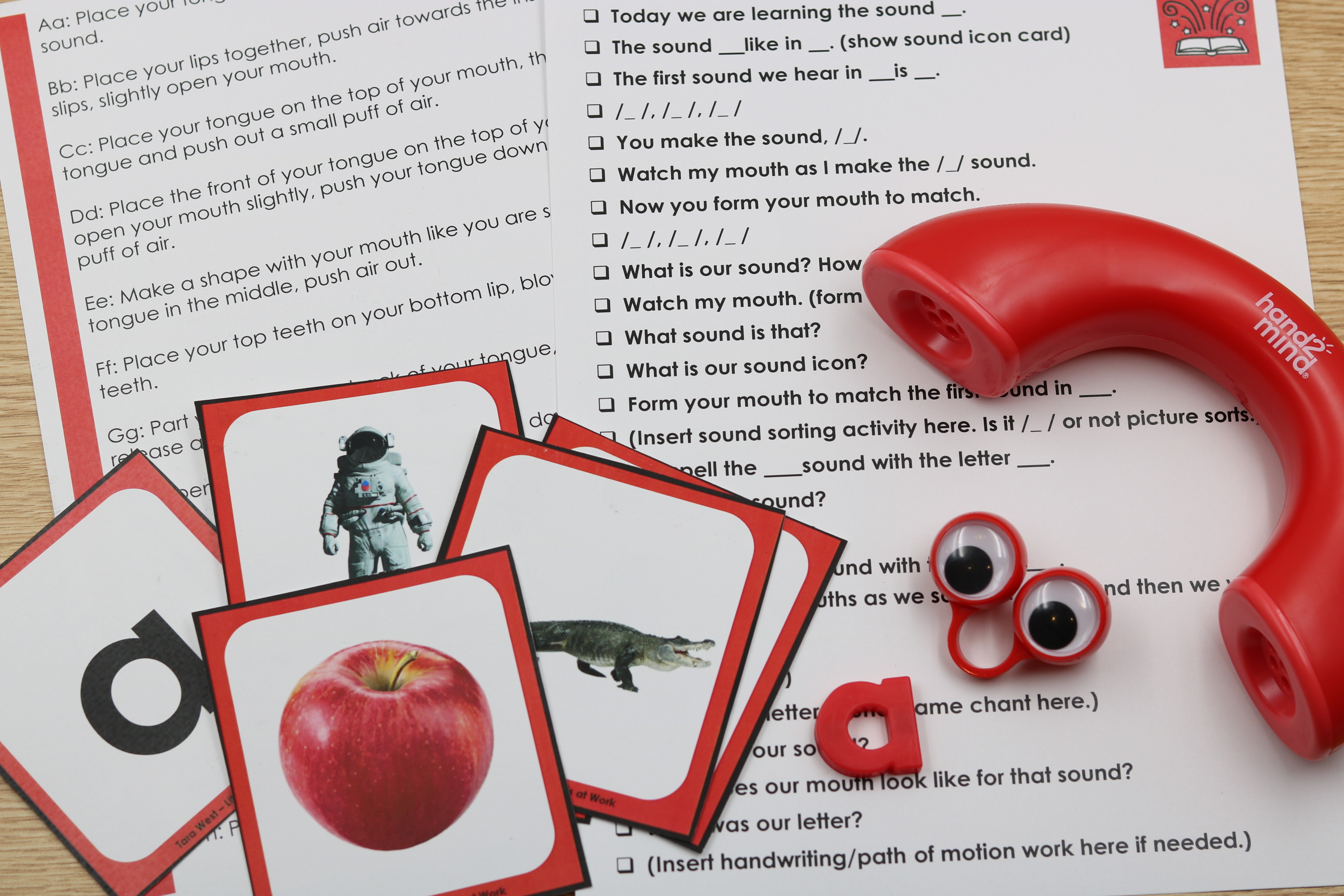
One thing I always emphasize is the importance of teaching students HOW sounds are produced. Paying attention to mouth movements, articulation, and accurate sound production helps students develop a stronger understanding of individual sounds. This is especially important for students who struggle to remember sounds or consistently produce them correctly. We want students to have a solid understanding of these foundational skills before asking them to take the next step into blending!
If you're working on strengthening these early skills, be sure to read my blog post, From Sounds to Words: Teaching Blending That Sticks. I share additional information about building strong sound foundations, along with FREE letter formation scripts and alphabet resources to support your instruction!
Why Start With Just Two Sounds?
Before students can successfully blend three or more sounds to read words, some benefit from additional opportunities to connect just two sounds. This gives them a chance to focus on the blending process without having to hold three separate sounds in their working memory. Once students are comfortable connecting two sounds, we can begin extending that process into CVC word reading.
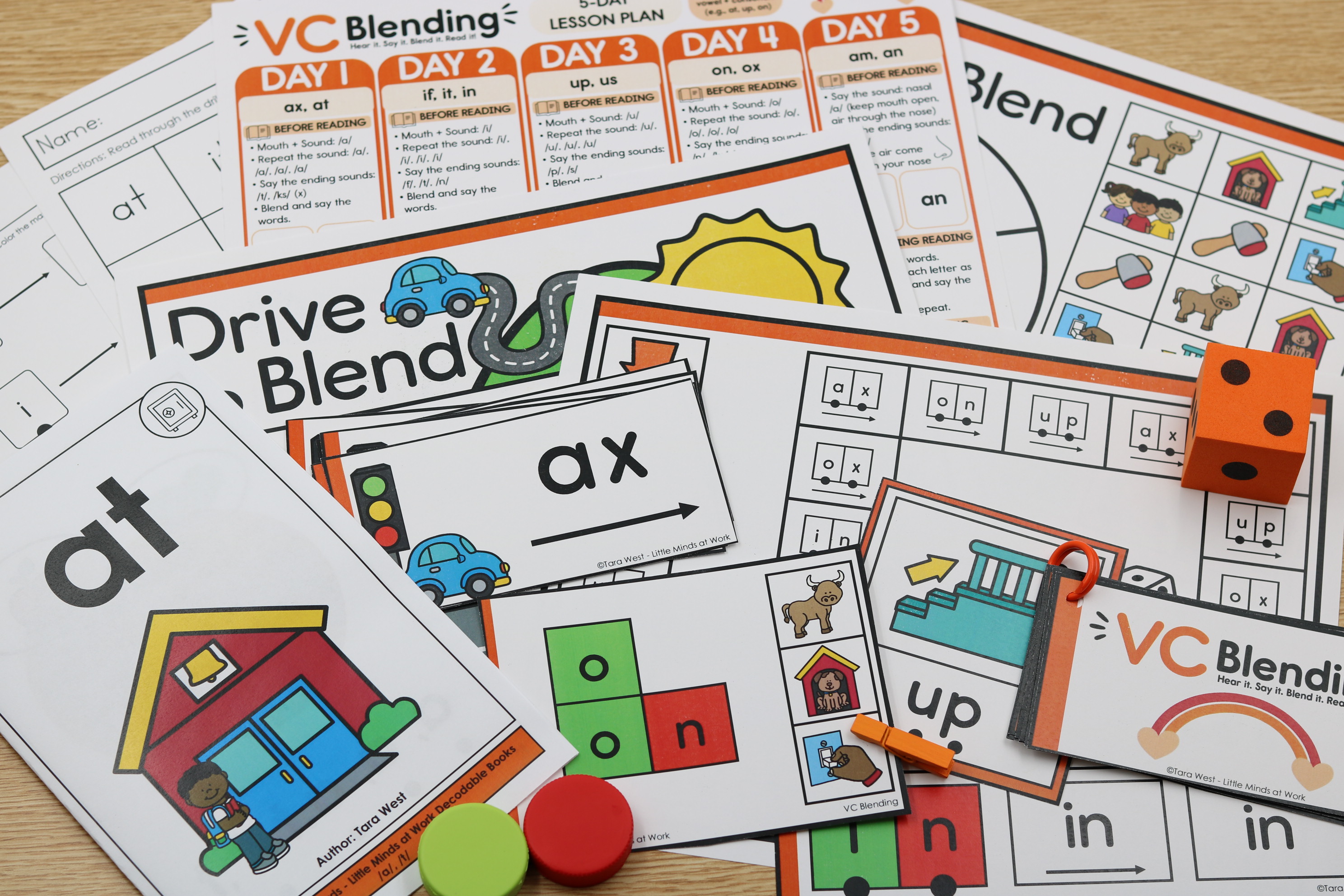
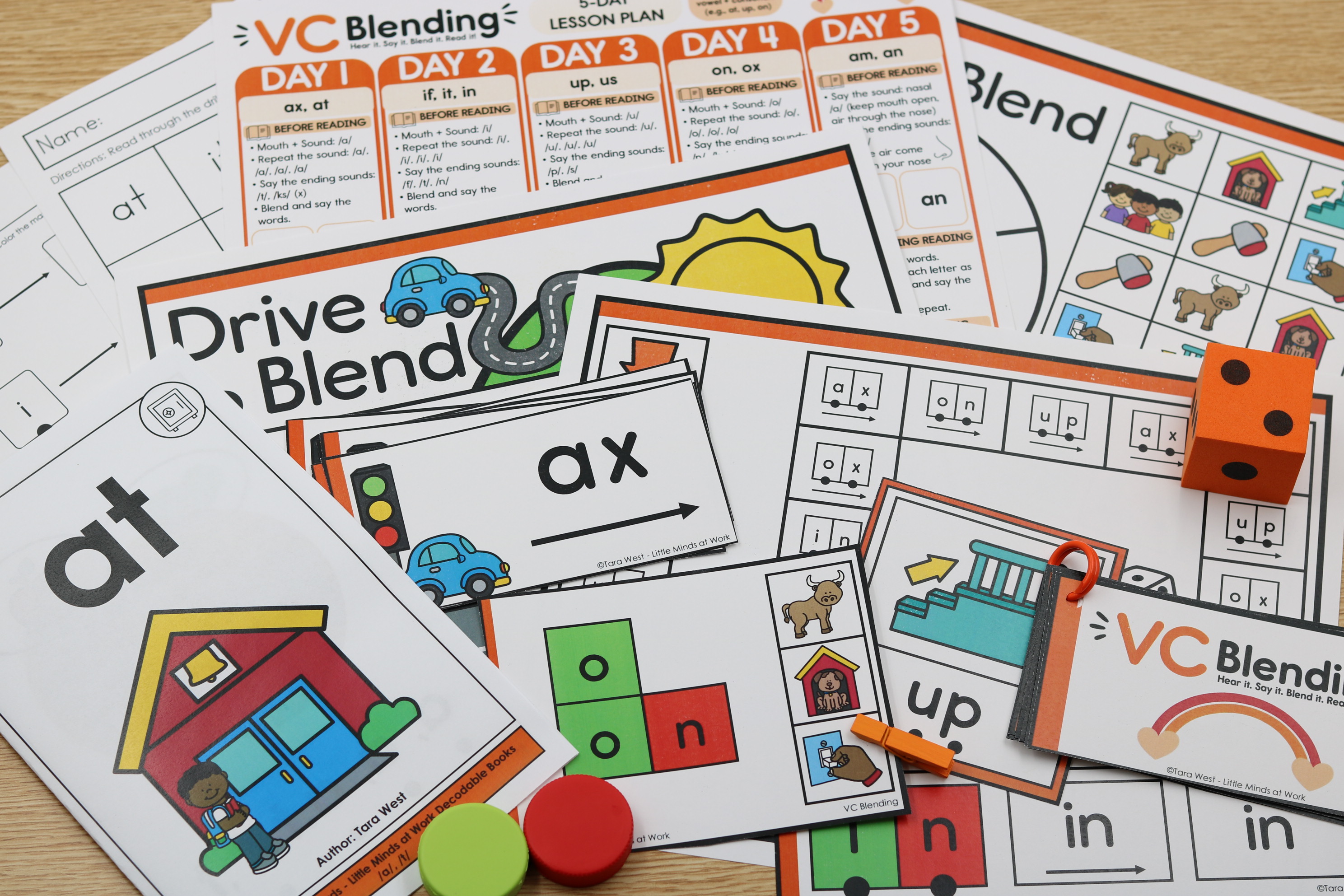
For students who need this additional support, VC blending with words such as at, in, and up can provide a helpful starting point. I've shared an entire collection of FREE VC blending resources, including lesson plans, digital slides, decodable books, and hands-on activities, in a separate blog post. You can read VC Blending: The Next Step After Learning Letter Sounds to learn more about this instructional progression and grab those additional freebies!
FREE Tap and Blend Through: Two-Sound and CVC Blending Drills
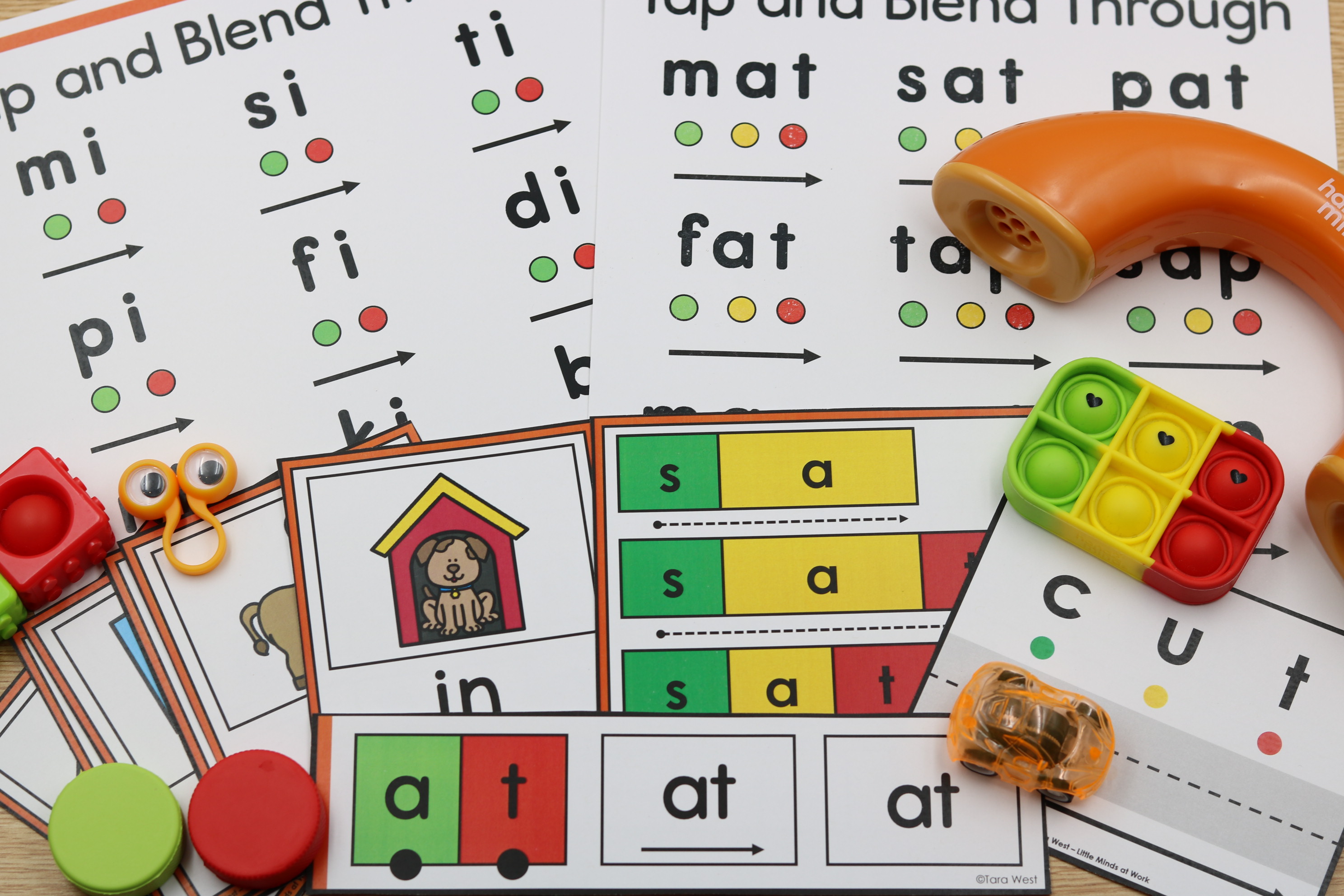
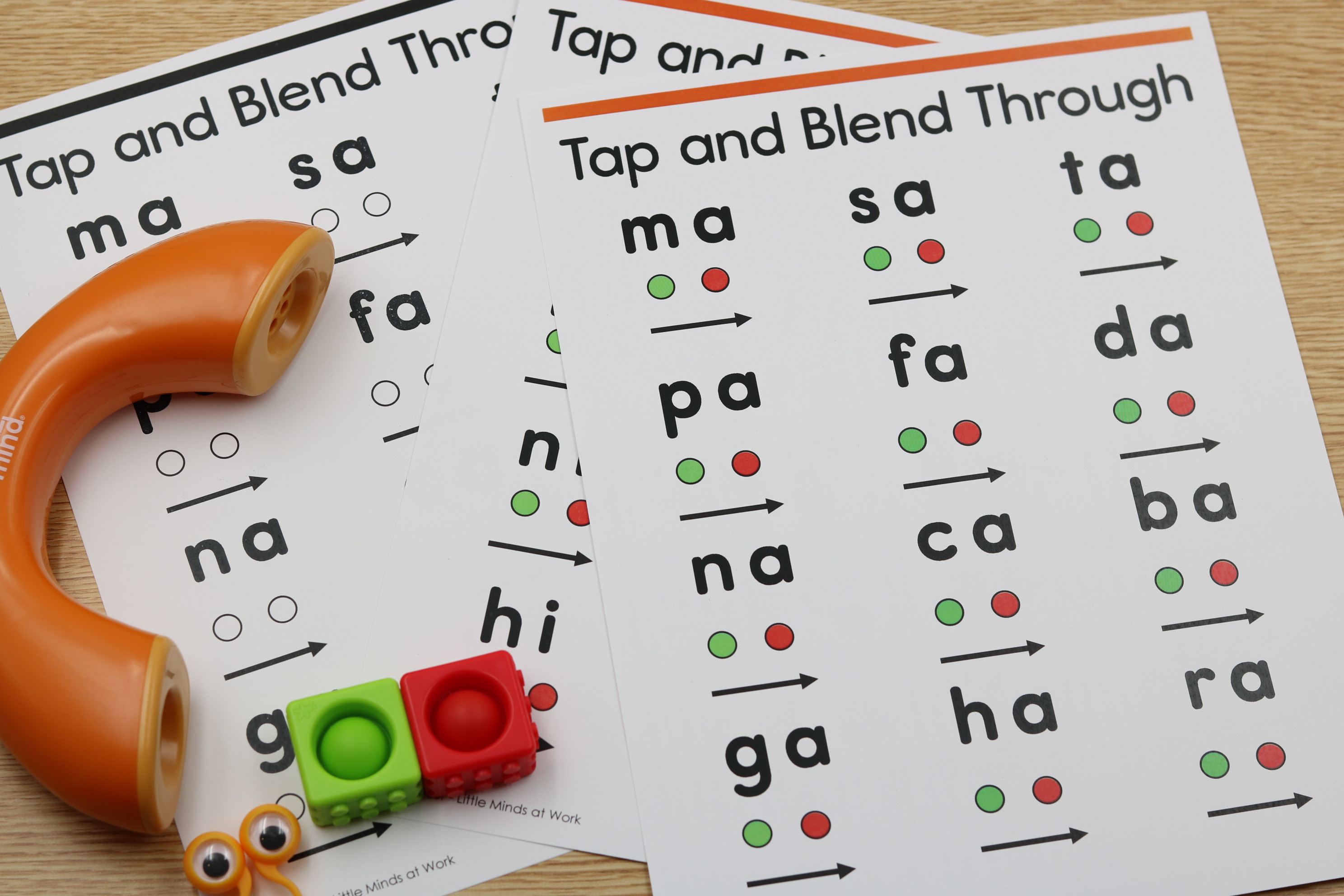
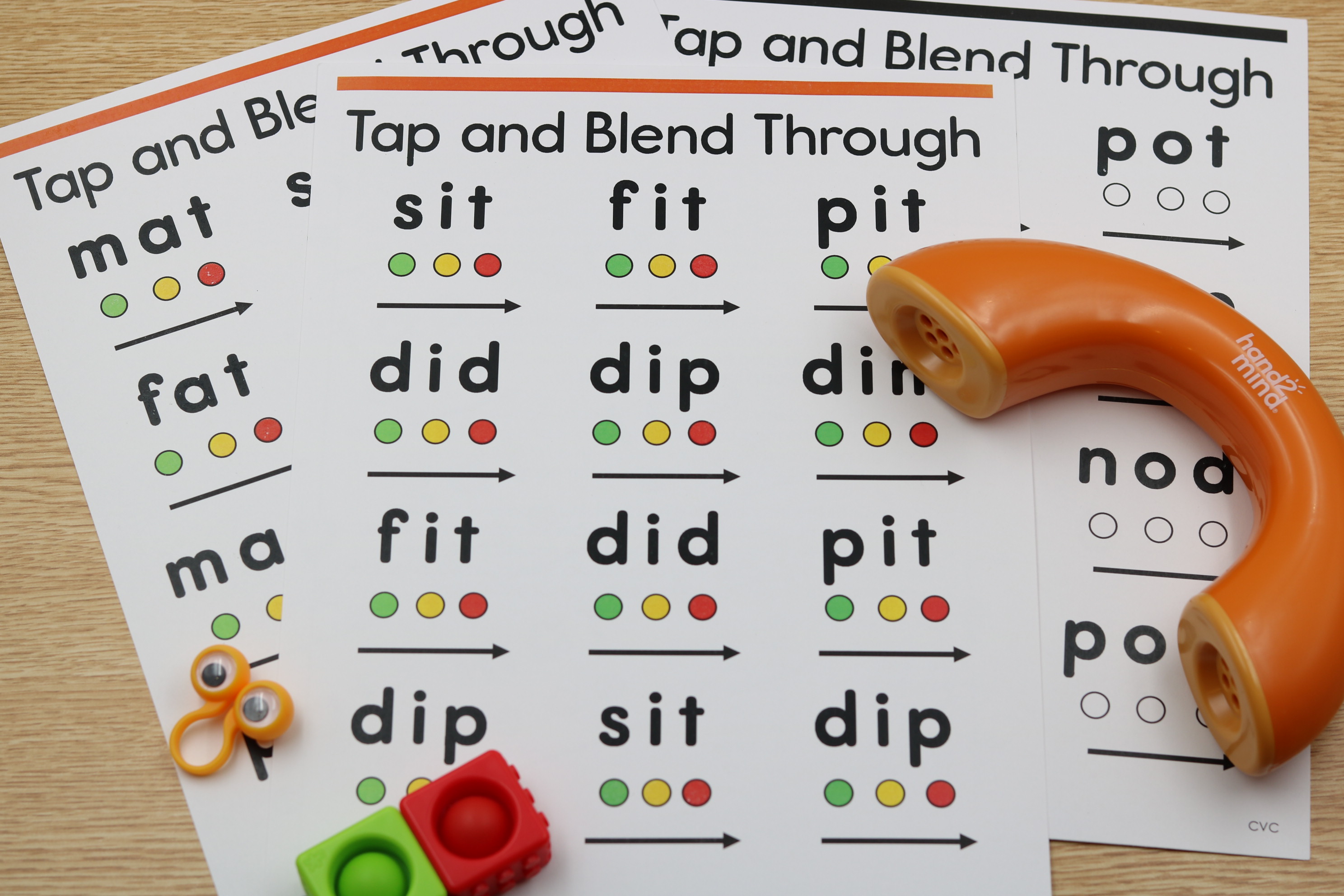
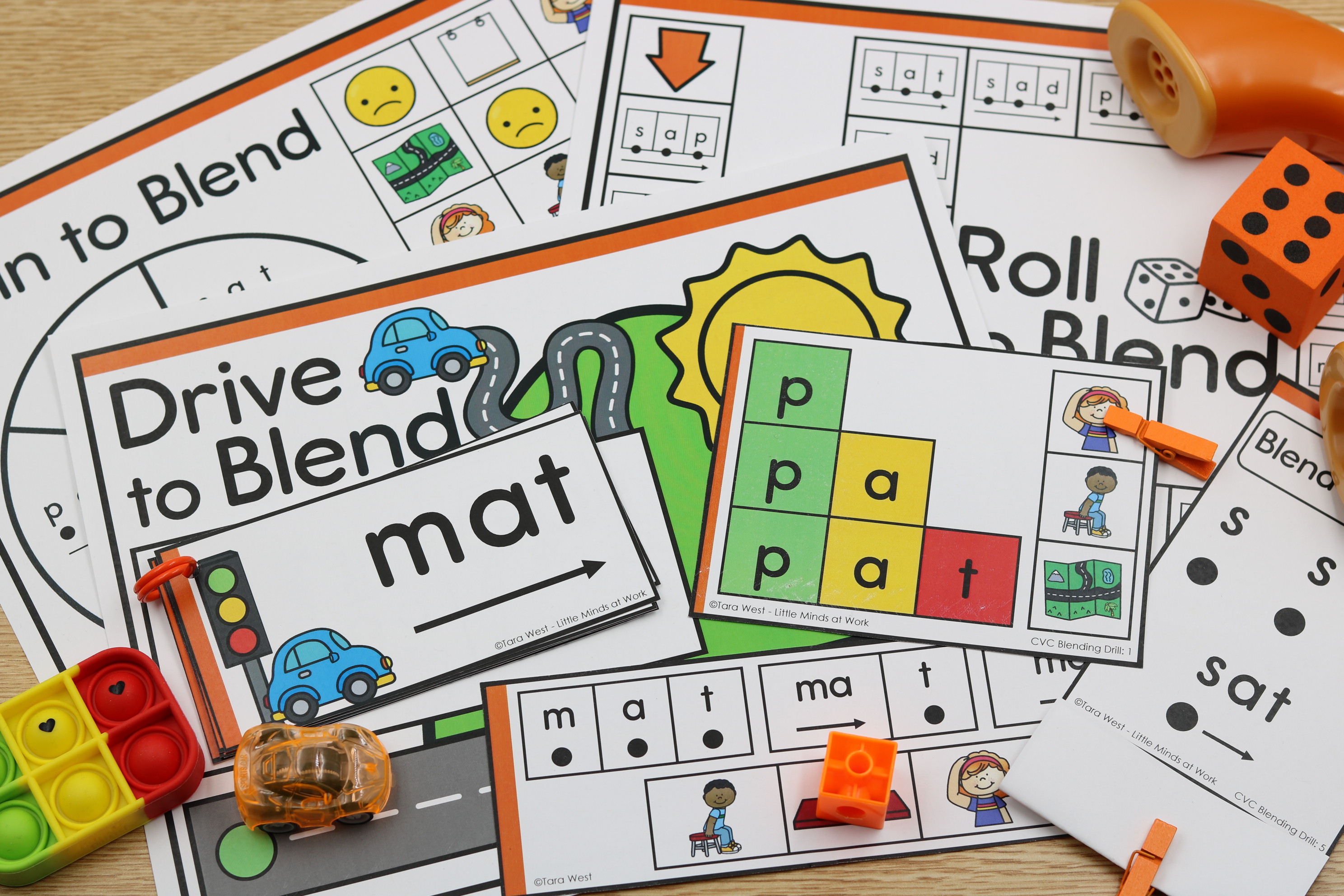
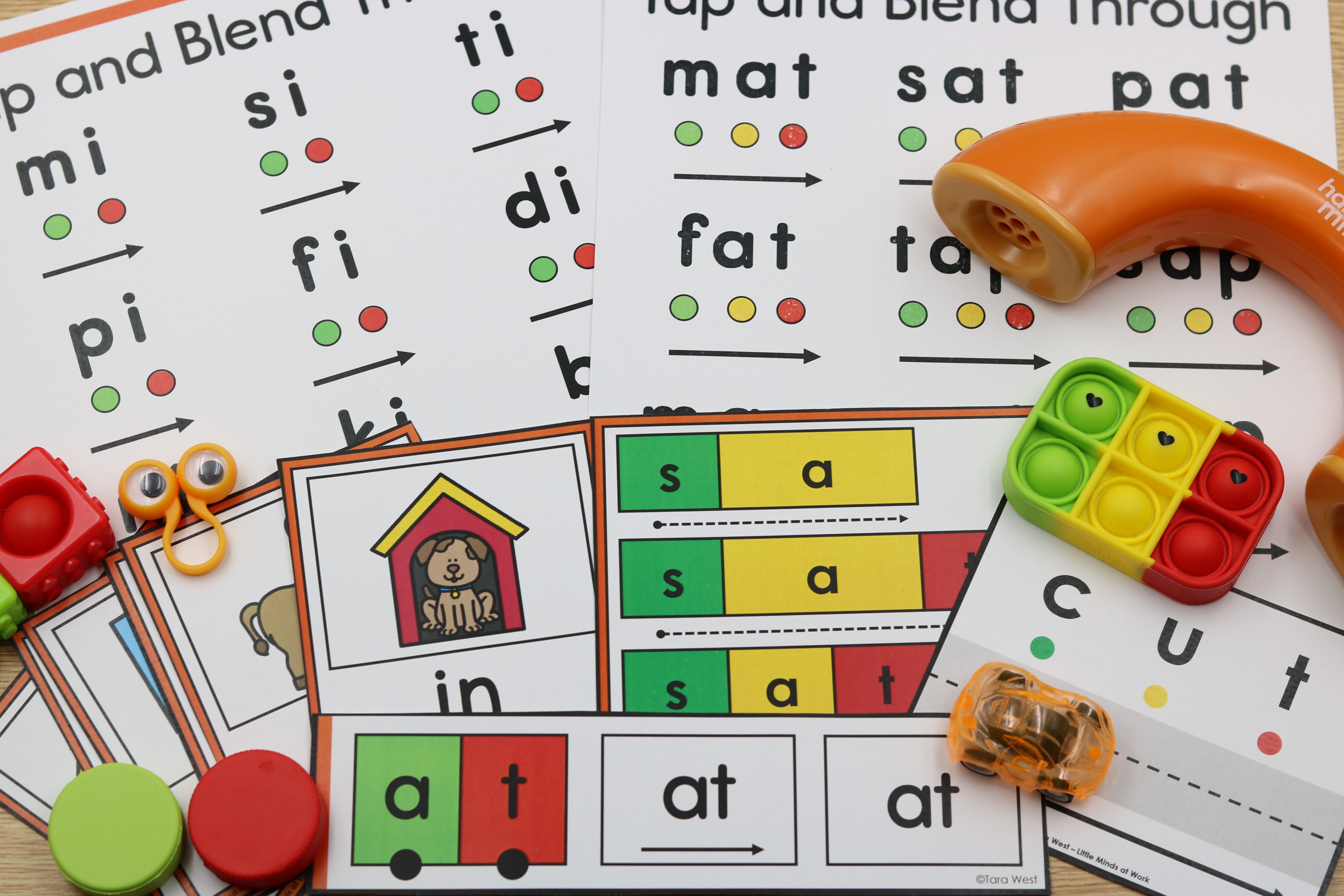
I am SO excited to share these FREE Tap and Blend Through pages! These blending drills were designed to give beginning readers a simple, visual way to practice connecting sounds. Each page includes letters, tapping dots, and directional arrows that help students move smoothly from one sound to the next. The resource includes both two-sound blending drills and CVC word blending drills, with color and black-and-white options!
You might notice that some of the two-sound combinations, such as ma and sa, resemble open syllables. However, these drills are NOT intended to teach syllable types or introduce new words! They intentionally pair a consonant with a vowel so students can practice identifying individual sounds and connecting them smoothly without pauses or added sounds. The goal is blending sounds, not reading syllables or memorizing letter combinations. These drills serve as a temporary scaffold before students progress to the included CVC blending pages.
To use the pages, model each individual sound as you point to the corresponding dots. Then guide students to blend the sounds together smoothly while following the arrow. As students become more confident, move into the CVC pages and encourage them to connect the first two sounds before adding the final sound. These drills are perfect for whole-group instruction, small groups, intervention, or a quick blending warm-up!
👉 Click here to access the free download.
Make Blending Part of Your Daily Phonics Instruction
Blending isn't something we teach once and expect students to master overnight! Students need consistent opportunities to practice connecting sounds as they learn new phonics skills. I love incorporating blending into a predictable daily routine because it allows teachers to provide explicit modeling, guide students through the process, and immediately address errors or misconceptions.
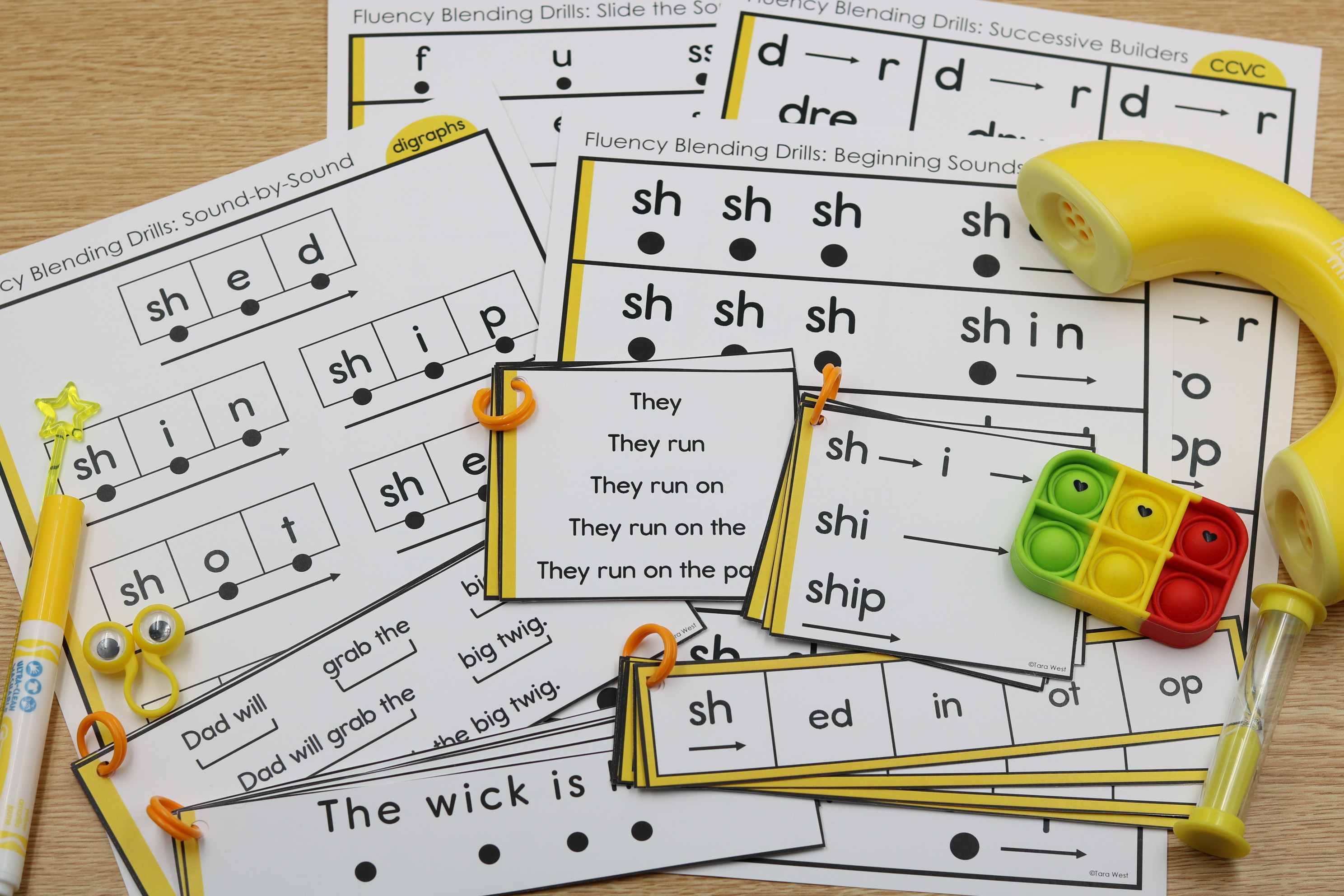
Two of my favorite resources for making this instruction easier are my Phonics Digital Slides and the BIG Blending Bundle. Both were designed to support systematic phonics instruction while giving students the repetition they need to become more accurate and confident readers.
Phonics Digital Slides: Explicit, Teacher-Led Instruction
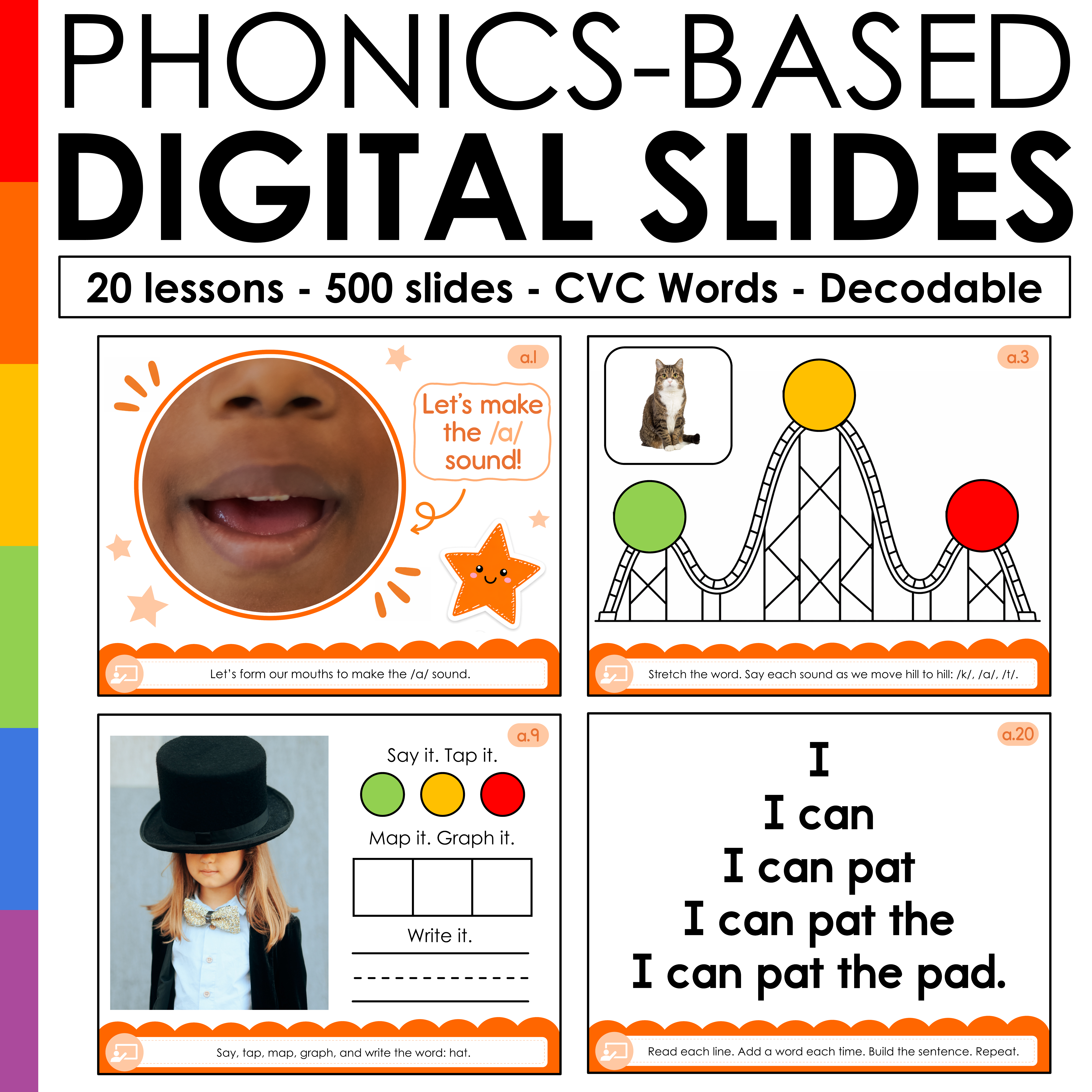
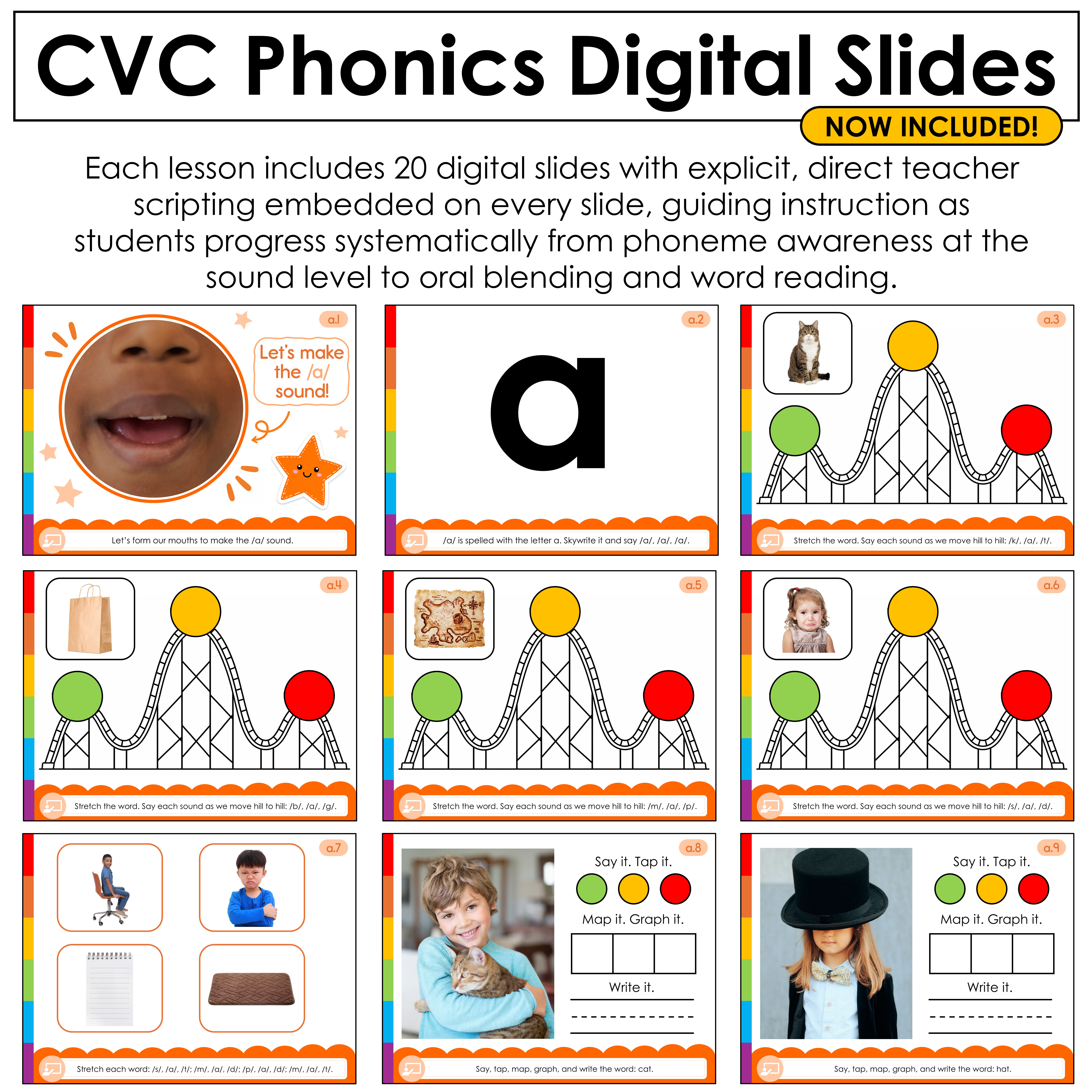
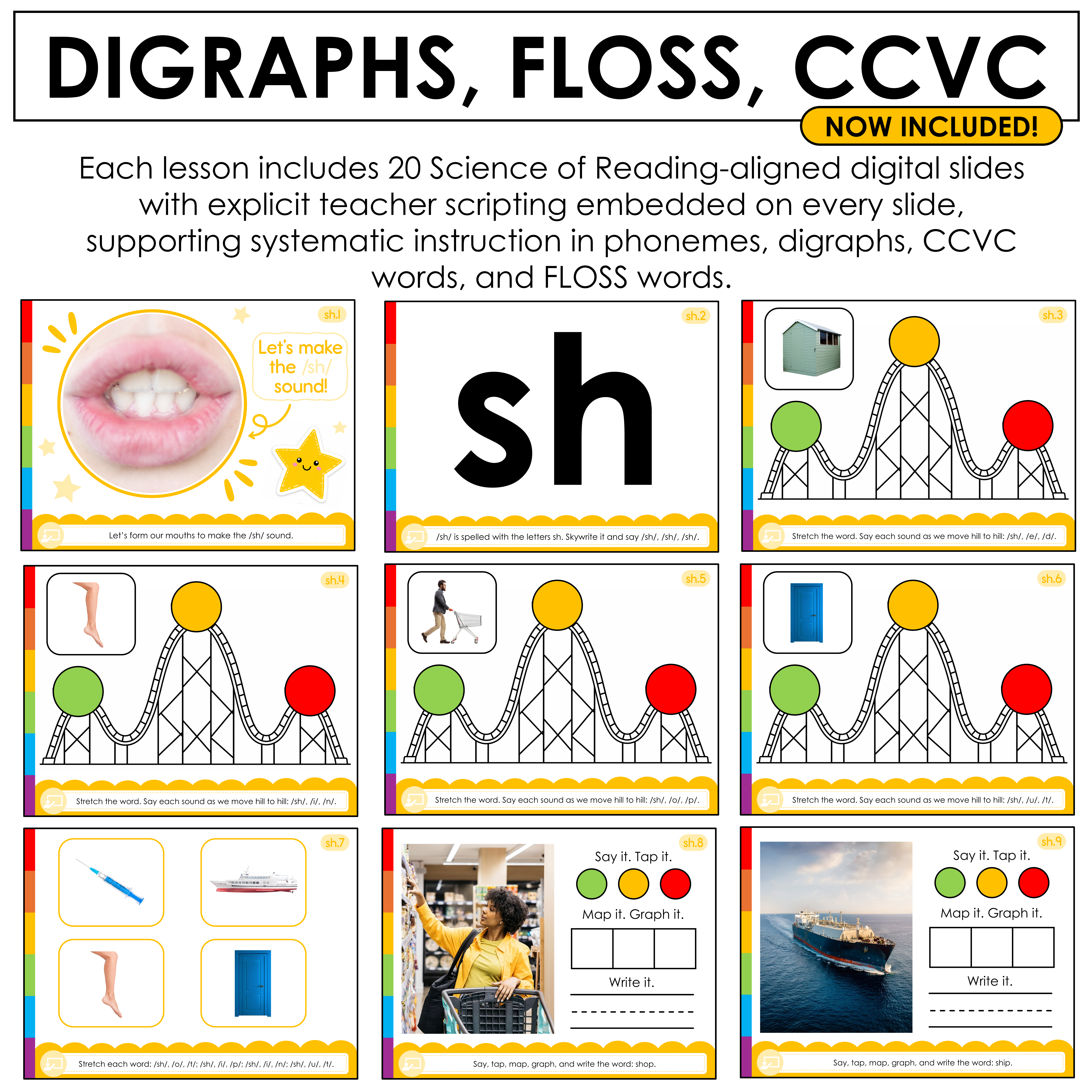
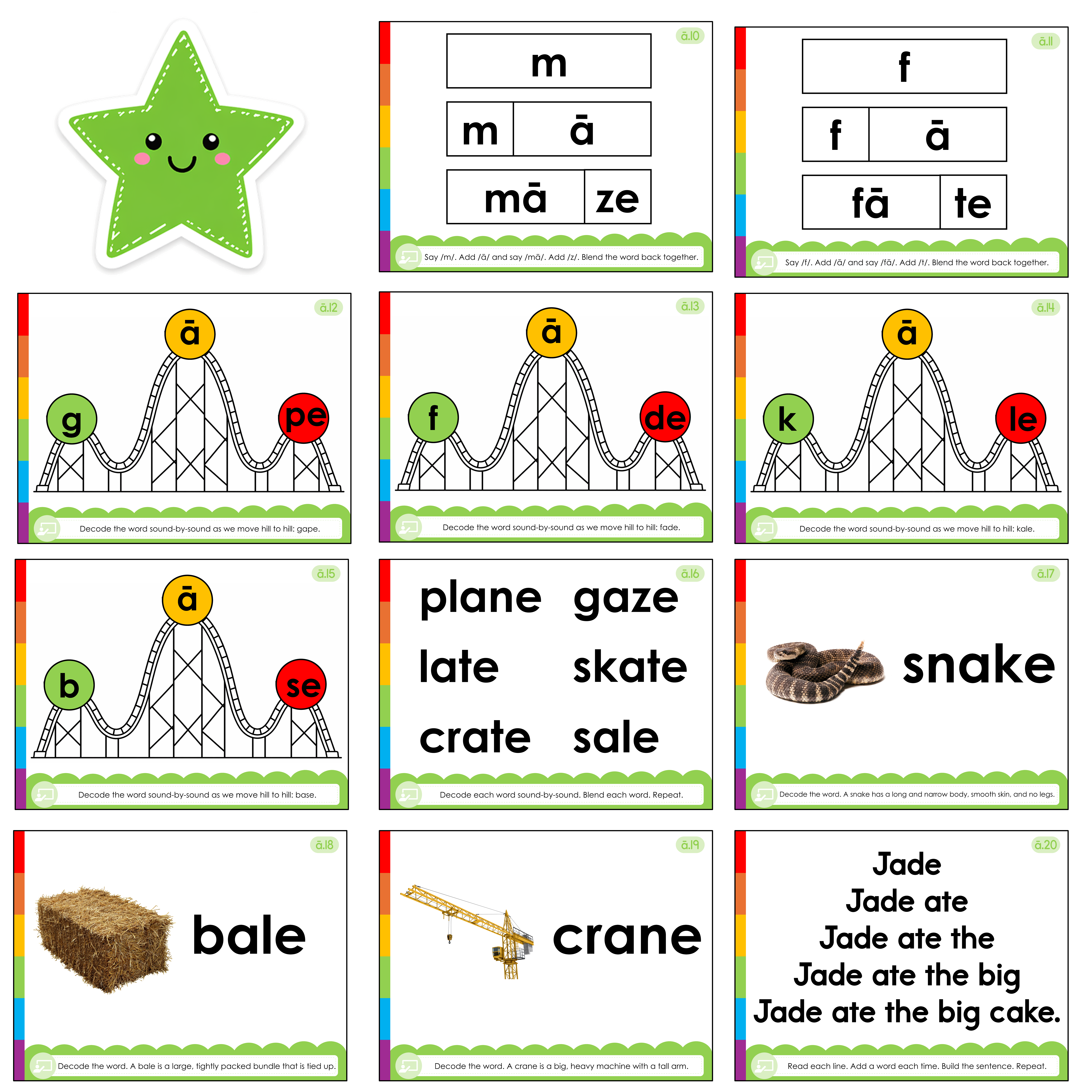
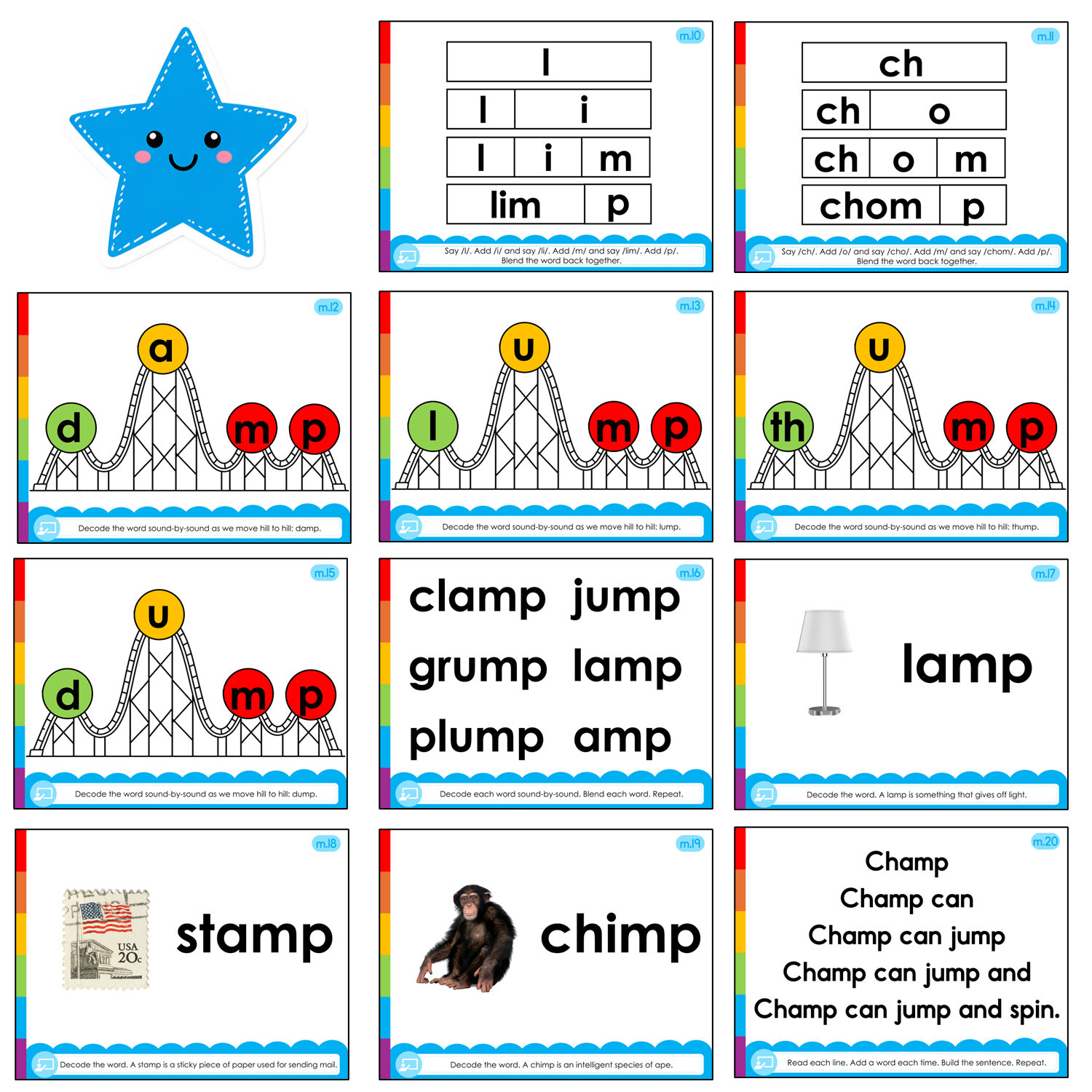
If you're looking for a way to make your daily phonics instruction more consistent and easier to prepare, my Phonics Digital Slides are a wonderful option! These slides provide a predictable, teacher-led whole-group routine that allows students to actively participate in foundational phonics instruction. Each lesson follows a structured 20-slide routine, helping teachers organize instruction without having to gather and prepare a new collection of materials every day.
The slides cover skills from alphabet knowledge and CVC words through digraphs, consonant blends, CVCE, r-controlled vowels, and vowel variants. They are designed for explicit teaching, which means the teacher is actively modeling, guiding, and responding to students throughout the lesson. I especially love that students become familiar with the instructional routine, allowing them to focus their attention on the phonics skills they're learning rather than figuring out a new activity each day.
👉 Click here to explore the Phonics Digital Slides.
The BIG Blending Bundle: Drills, Centers, and Printables
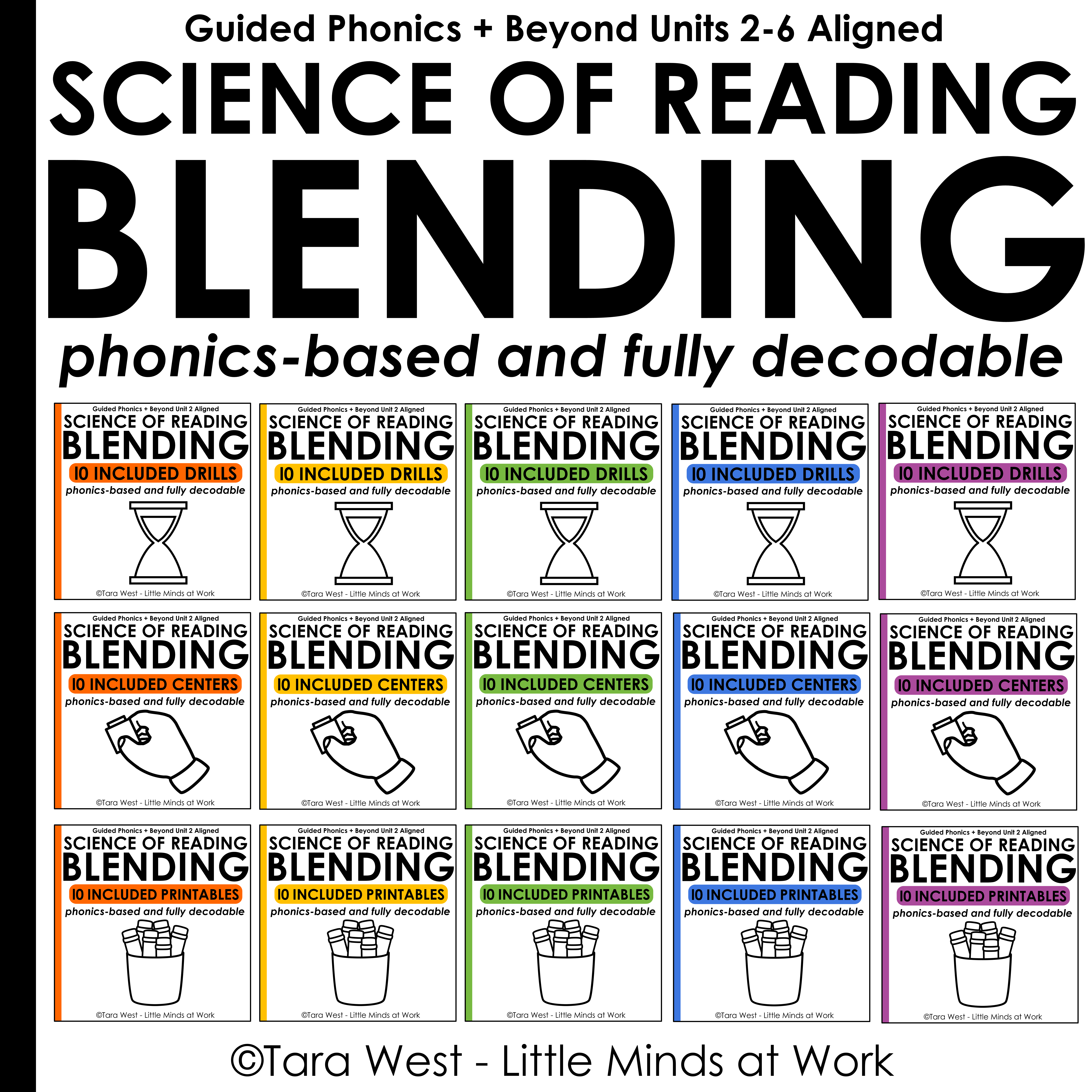
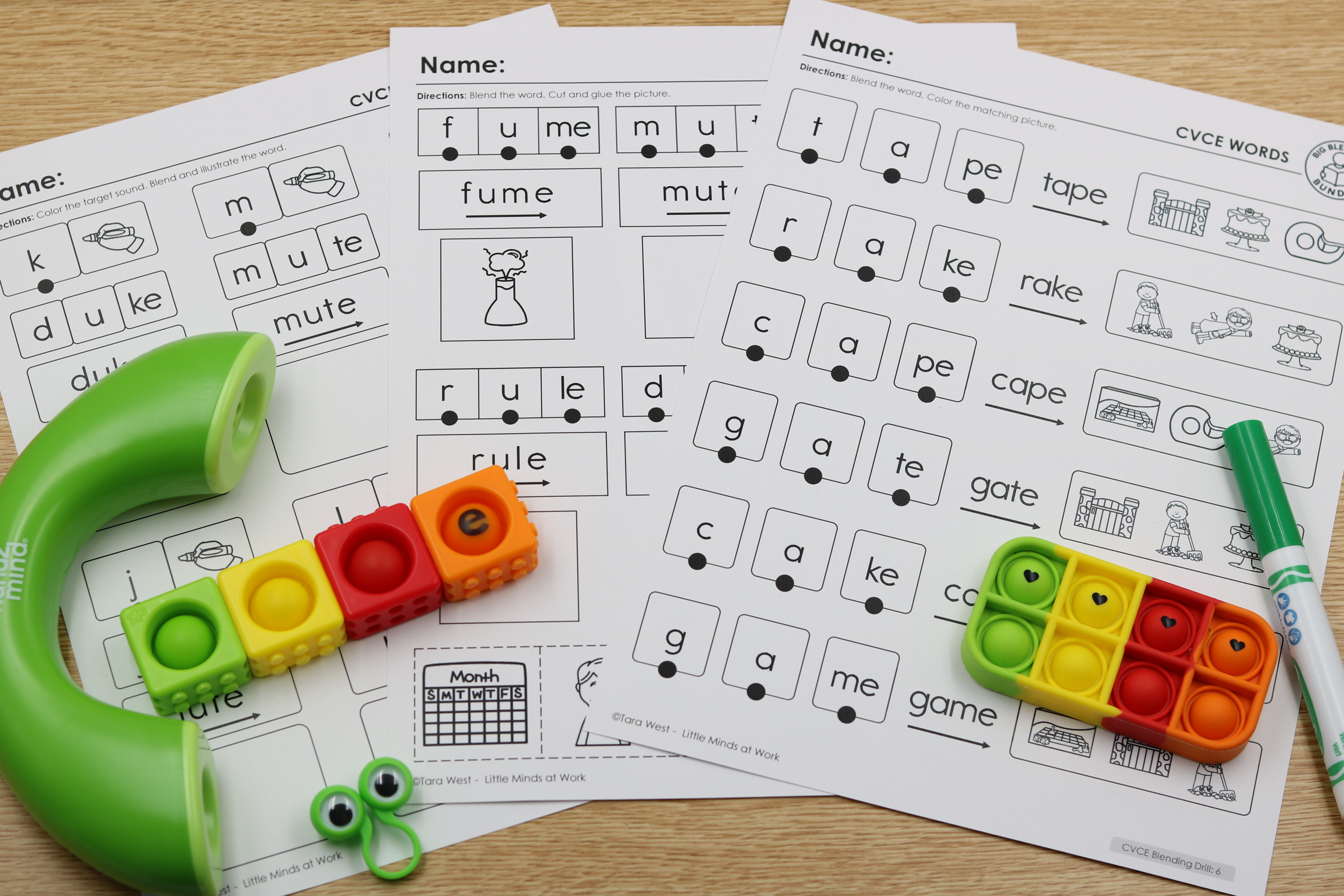
Once students begin understanding how sounds connect, they need plenty of opportunities to practice applying that skill! My BIG Blending Bundle was created to give teachers a large collection of phonics-based blending activities that can be used throughout the school year. The bundle includes blending drills, centers, and printables aligned with Guided Phonics + Beyond Units 2–6, progressing from CVC words through more advanced phonics patterns, including vowel variants.
One thing I love about this collection is the variety of practice opportunities it provides. Teachers can use blending drills for quick, explicit instruction and then reinforce those same phonics skills with centers and printables. Students continue practicing familiar routines while the words become more complex, helping them apply their blending skills across the phonics patterns they're learning.
👉 Click here to explore the BIG Blending Bundle.
More FREE Blending Activities for Your Classroom!
Now that we've talked about the importance of explicit blending instruction, I want to share even MORE free resources you can use with your students! I love having different activities available because students often need additional practice with the same foundational skills. These freebies can easily be incorporated into your existing phonics block, small groups, or intervention lessons without requiring an entirely new instructional routine.
FREE Blending Activity: [INSERT ORIGINAL NEWSLETTER FREEBIE TITLE]
[INSERT PHOTO: FREEBIE]
[INSERT SHORT DESCRIPTION OF THE RESOURCE, THE BLENDING SKILL IT TARGETS, AND HOW TEACHERS CAN USE IT.]
👉 Click here to access the free download.
FREE Blending Activity: [INSERT ORIGINAL NEWSLETTER FREEBIE TITLE]
[INSERT PHOTO: FREEBIE]
[INSERT SHORT DESCRIPTION OF THE RESOURCE, THE BLENDING SKILL IT TARGETS, AND HOW TEACHERS CAN USE IT.]
👉 Click here to access the free download.
FREE Blending Activity: [INSERT ORIGINAL NEWSLETTER FREEBIE TITLE]
[INSERT PHOTO: FREEBIE]
[INSERT SHORT DESCRIPTION OF THE RESOURCE, THE BLENDING SKILL IT TARGETS, AND HOW TEACHERS CAN USE IT.]
👉 Click here to access the free download.
Finding Time for Blending Practice
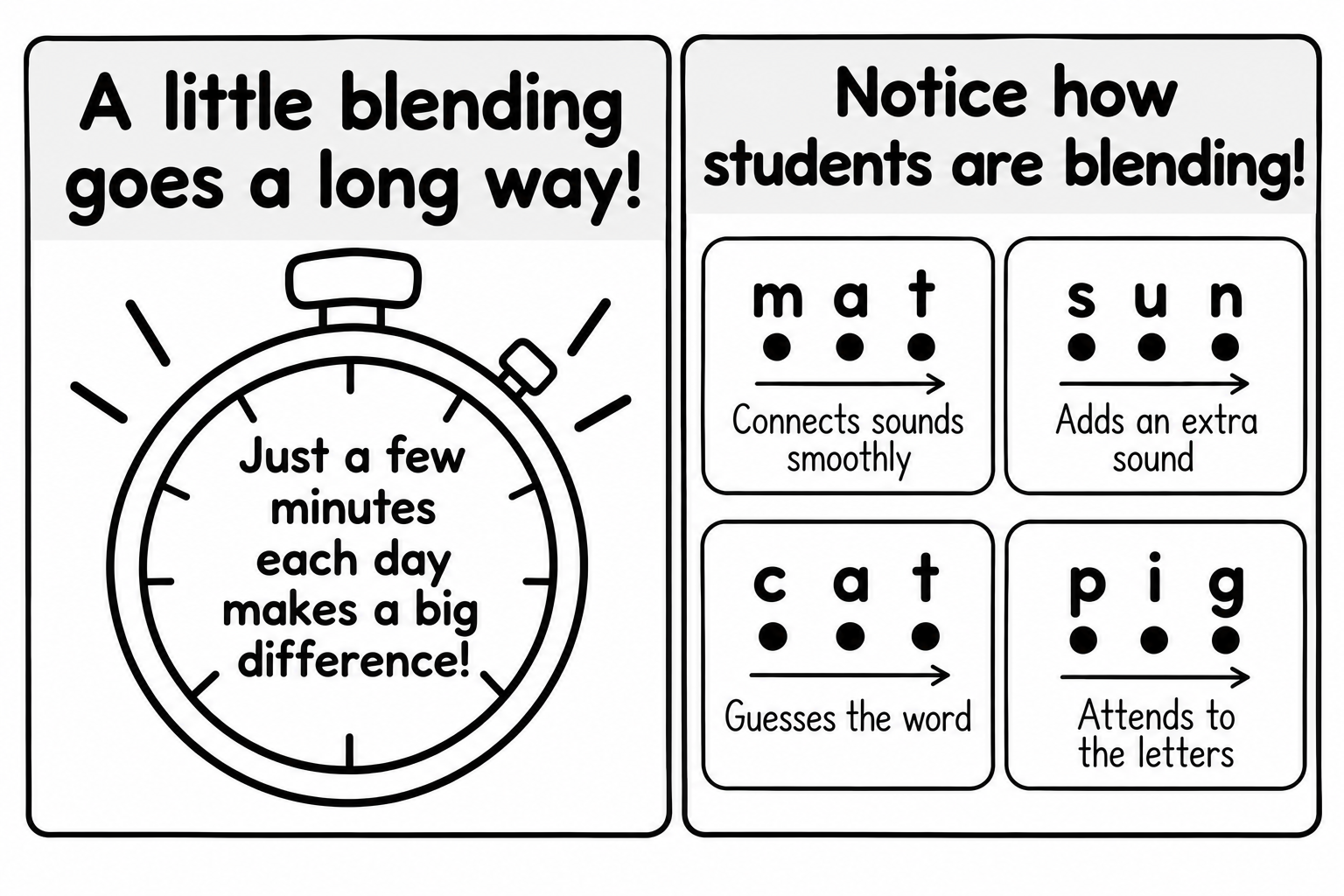
One of my favorite things about blending drills and activities is that they don't have to take up a large portion of your instructional day to be beneficial! A few minutes of intentional practice during your whole-group phonics lesson, small-group instruction, or intervention time can provide valuable opportunities for students to strengthen their blending skills. The key is making sure students are receiving accurate modeling, guided practice, and immediate feedback as they work toward blending more independently.
I also encourage teachers to pay attention to HOW students are blending, rather than simply whether they arrive at the correct word. Are they connecting the sounds smoothly? Are they adding an extra sound after consonants? Are they guessing instead of attending to the letters? These observations help us identify exactly where students need additional support and make informed decisions about what to teach next.
Building Confident, Successful Readers
At the end of the day, our goal isn't simply to help students memorize letter sounds or complete blending activities. We want them to understand that letters represent sounds, those sounds can be connected, and that process allows them to read words independently. When we explicitly teach the blending process, provide appropriate scaffolds, and give students plenty of meaningful practice, we're helping them develop skills they can carry into increasingly complex word reading.
I hope these FREE blending resources give you a few new ideas and make your phonics instruction a little easier to prepare! Whether you're working with students who are just beginning to connect two sounds or those who need more practice reading CVC words, consistent instruction and intentional practice can make such a difference. Happy blending!