The Handwriting Step We Skip Too Often
There's been a huge shift in early literacy over the past several years, and I couldn't be happier about it. More and more teachers are moving toward explicit instruction rooted in the Science of Reading. We're spending more time teaching phonological awareness, introducing letter sounds before letter names, and helping students build strong decoding skills from the very beginning. It's exciting to see because these instructional shifts are giving students a much stronger foundation for reading success.
As we've strengthened our literacy instruction, though, I've noticed one small piece that often gets overlooked: the movements behind the letters.
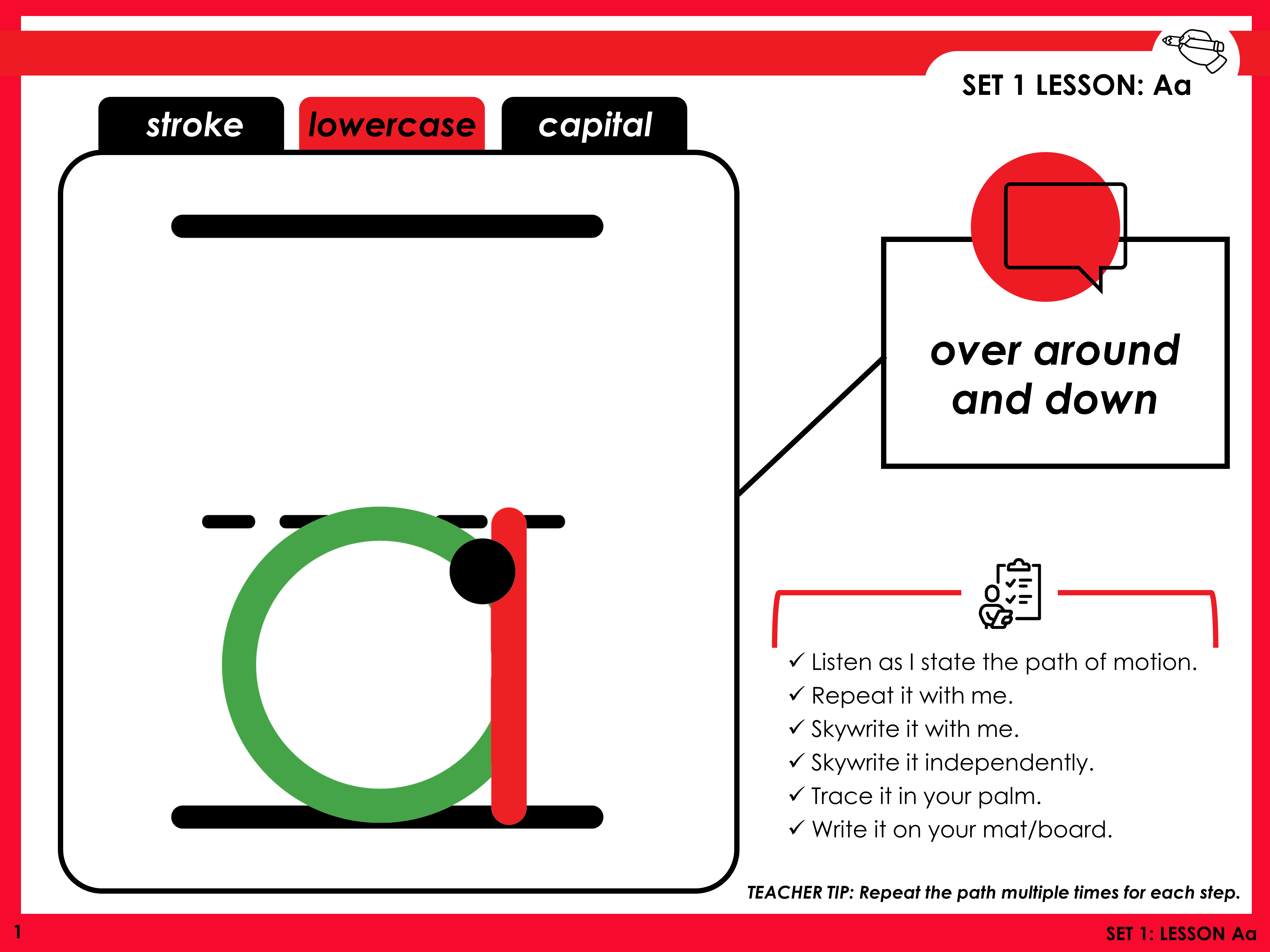
Think about the first time you teach students to write a lowercase a. You might say something like, "Over, around, down." But have you ever stopped to ask yourself if your students actually know what those directions mean when they're holding a pencil?
For many young learners, they don't.
Instead, we're asking them to learn the letter sound, recognize the grapheme, hold a pencil correctly, remember where to start, understand the movement pattern, and form the letter—all at the exact same time. That's a tremendous amount of information for a young child to process in a single lesson.
What if we slowed that process down just a bit?
Not by adding weeks of handwriting instruction, but by intentionally teaching the individual strokes before asking students to write complete letters.
When students already understand what it feels like to make an over stroke, an around stroke, or a down stroke, handwriting becomes much less intimidating. They're no longer learning an entirely new motor pattern with every letter. Instead, they're simply combining movements they've already practiced.
This idea isn't new. Developmental researchers and occupational therapists have long recognized that handwriting develops through a progression of motor skills. Before children are expected to perform the precise movements required for letter formation, they first benefit from opportunities to strengthen visual-motor integration, motor planning, and the foundational movements that make handwriting possible. The National Association for the Education of Young Children (NAEYC) also emphasizes the importance of providing meaningful experiences that build both gross and fine motor development before expecting children to perform increasingly precise writing tasks.
If your classroom is taking a sound-first approach to phonics, pre-writing letter strokes fit beautifully into that progression. Imagine spending one day introducing the letter sound while students practice the strokes they'll eventually use to write the grapheme. Then, when it's comes time to teach the actual letter formation, those movements already feel familiar. Sometimes, one intentional lesson is all it takes to give students a much stronger foundation for handwriting success.
Every Letter Is Built from Simple Strokes
When we look at the alphabet, we naturally see 26 different letters. Our students don't.
They see 26 completely different motor tasks.
As adults, we've formed letters so many thousands of times that we no longer think about the individual movements involved. Our brains have stored those movements as automatic motor sequences. Young children haven't reached that point yet. They're trying to remember where to begin, which direction to move, when to stop, how much pressure to use, and how to control their pencil—all while connecting a sound to a symbol.
That's one of the reasons I love teaching handwriting through pre-writing letter strokes.
Take the lowercase a, for example. Rather than introducing it as one complex letter, we can teach it as three simple movements: over, around, down. Suddenly, students aren't trying to memorize another letter. They're combining three movements they already know.
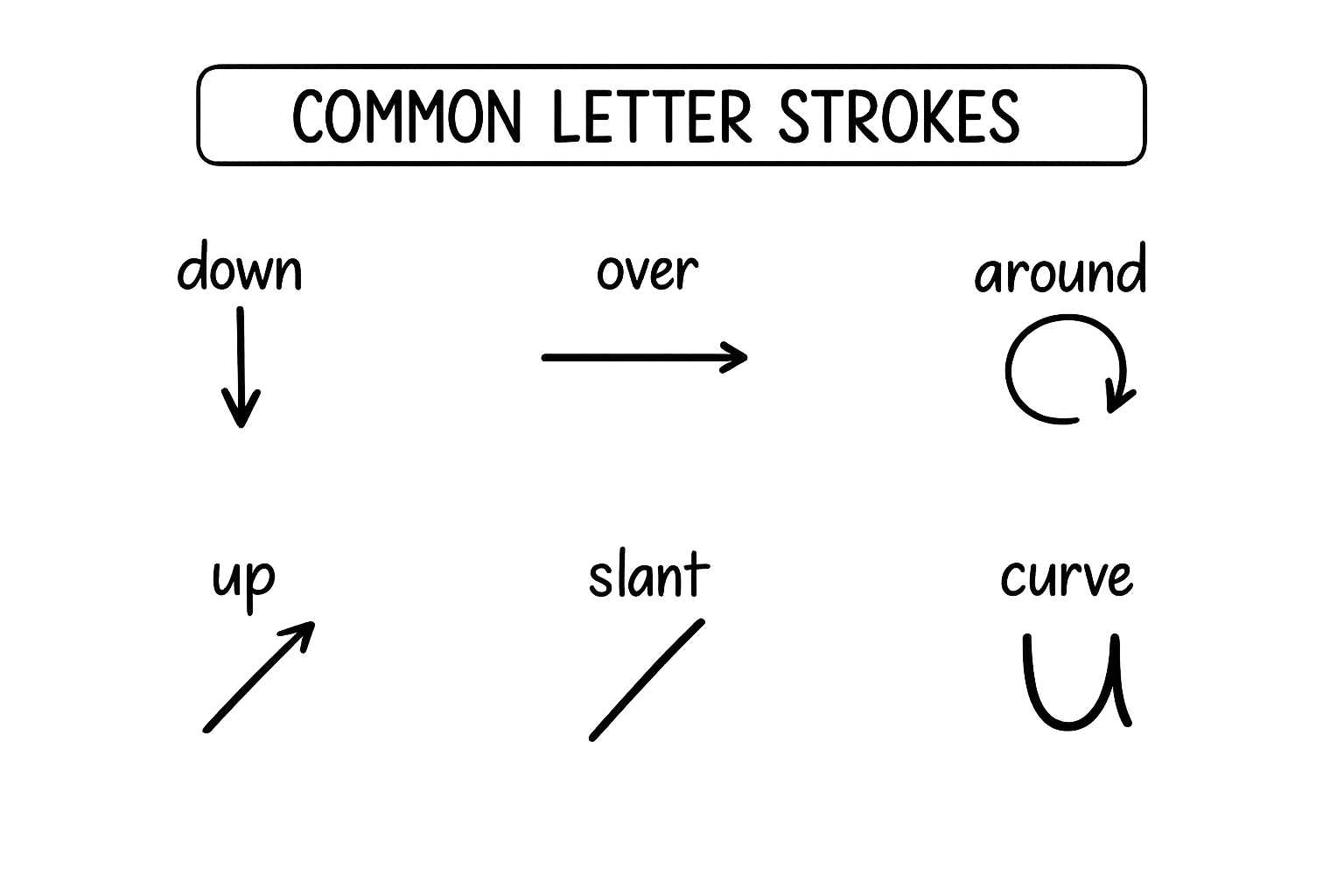
The same idea applies throughout the alphabet. As students become familiar with strokes like down, up, over, around, curve, and slant, those movements begin showing up again and again in different letters. Instead of feeling like every handwriting lesson introduces something completely new, students begin recognizing familiar patterns.
That's exactly what we want.
Whether we're teaching reading, mathematics, or handwriting, learning becomes much easier when students recognize patterns instead of memorizing isolated pieces of information. The more automatic those foundational stroke patterns become, the more mental energy students can devote to learning the letters themselves.
Build the Foundation Before the Letters
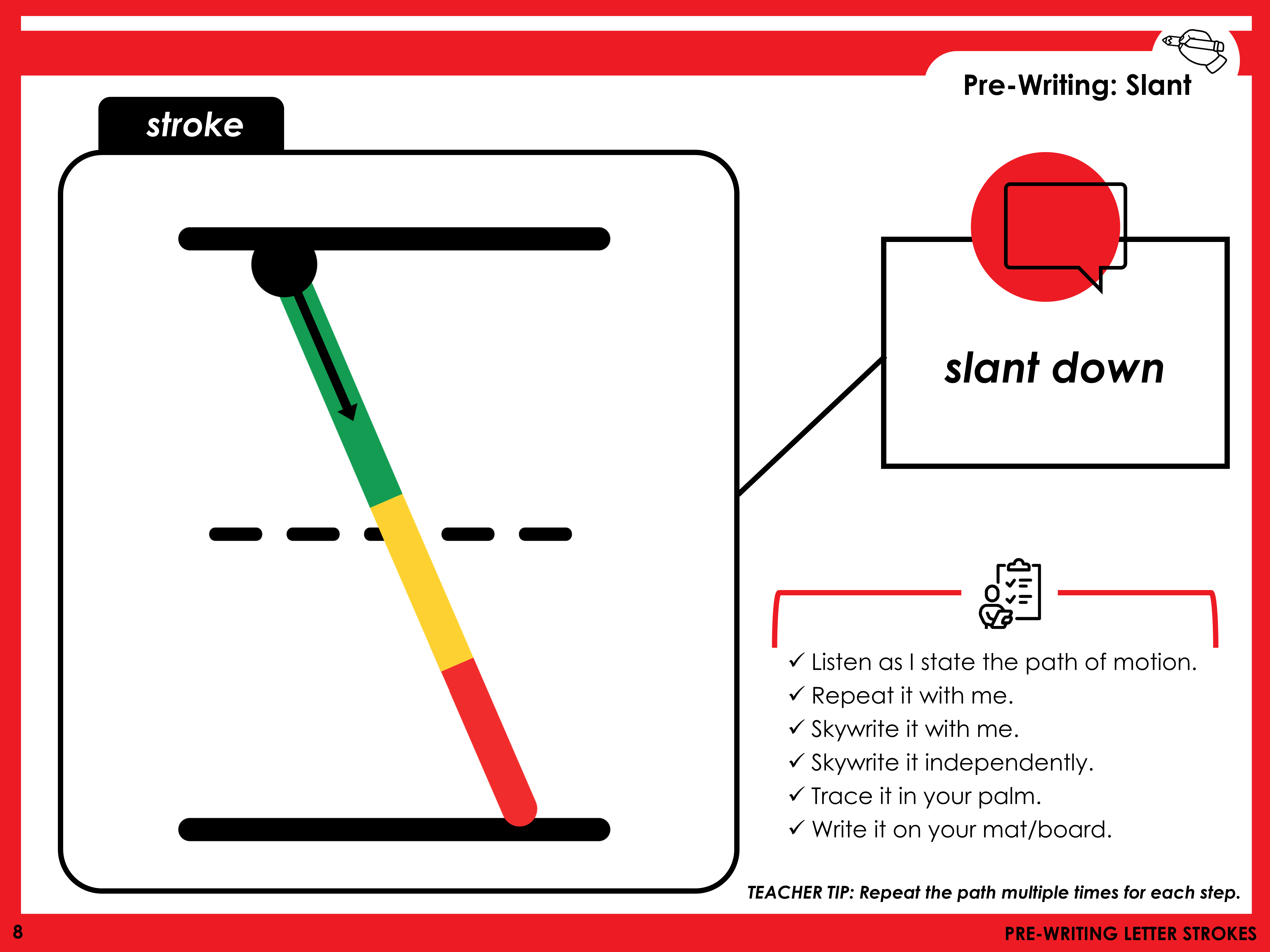
One of the easiest ways to introduce pre-writing letter strokes is by teaching one movement at a time before asking students to form complete letters. That's exactly why I created these FREE Pre-Writing Letter Strokes Digital Slides.
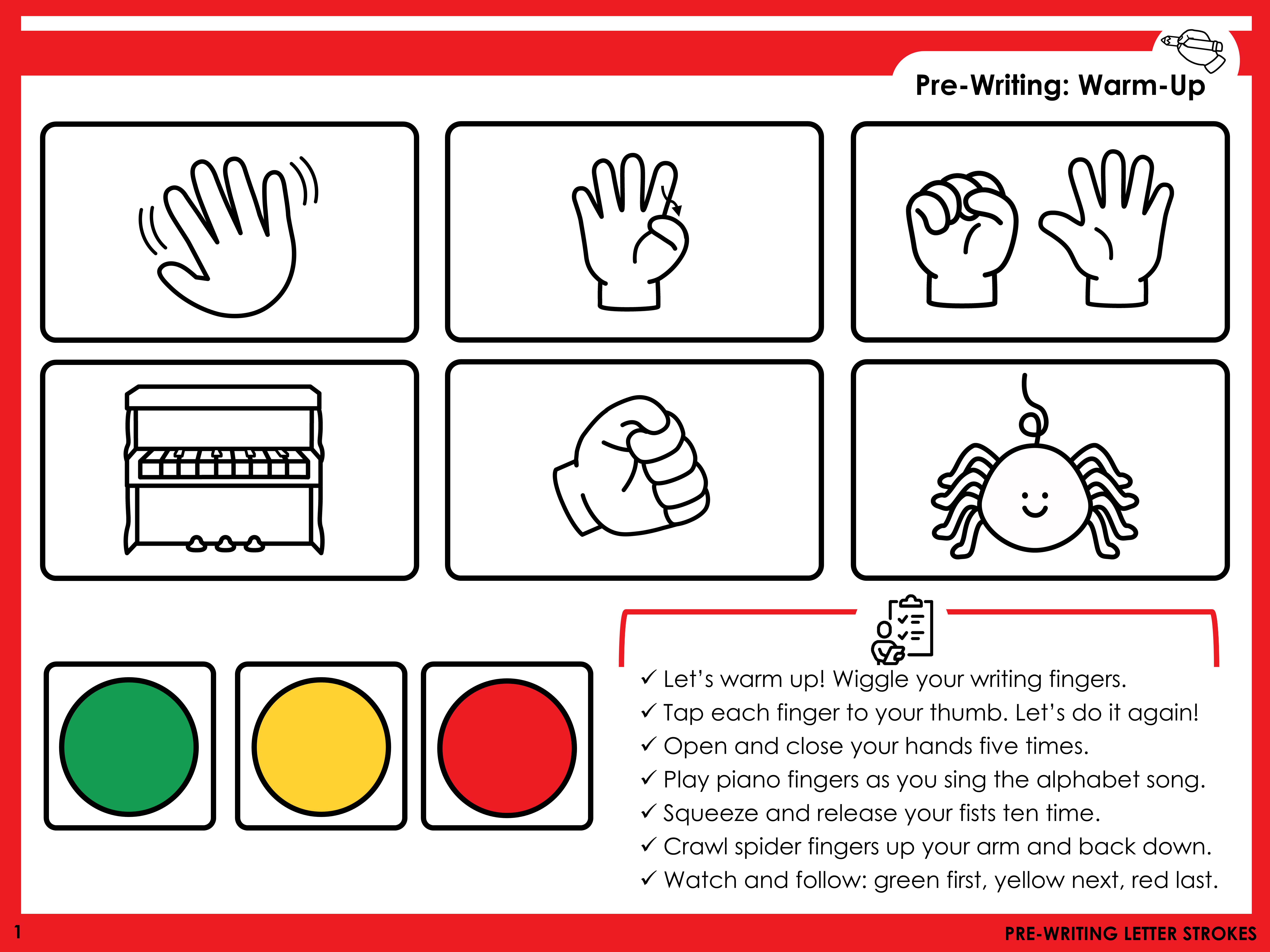
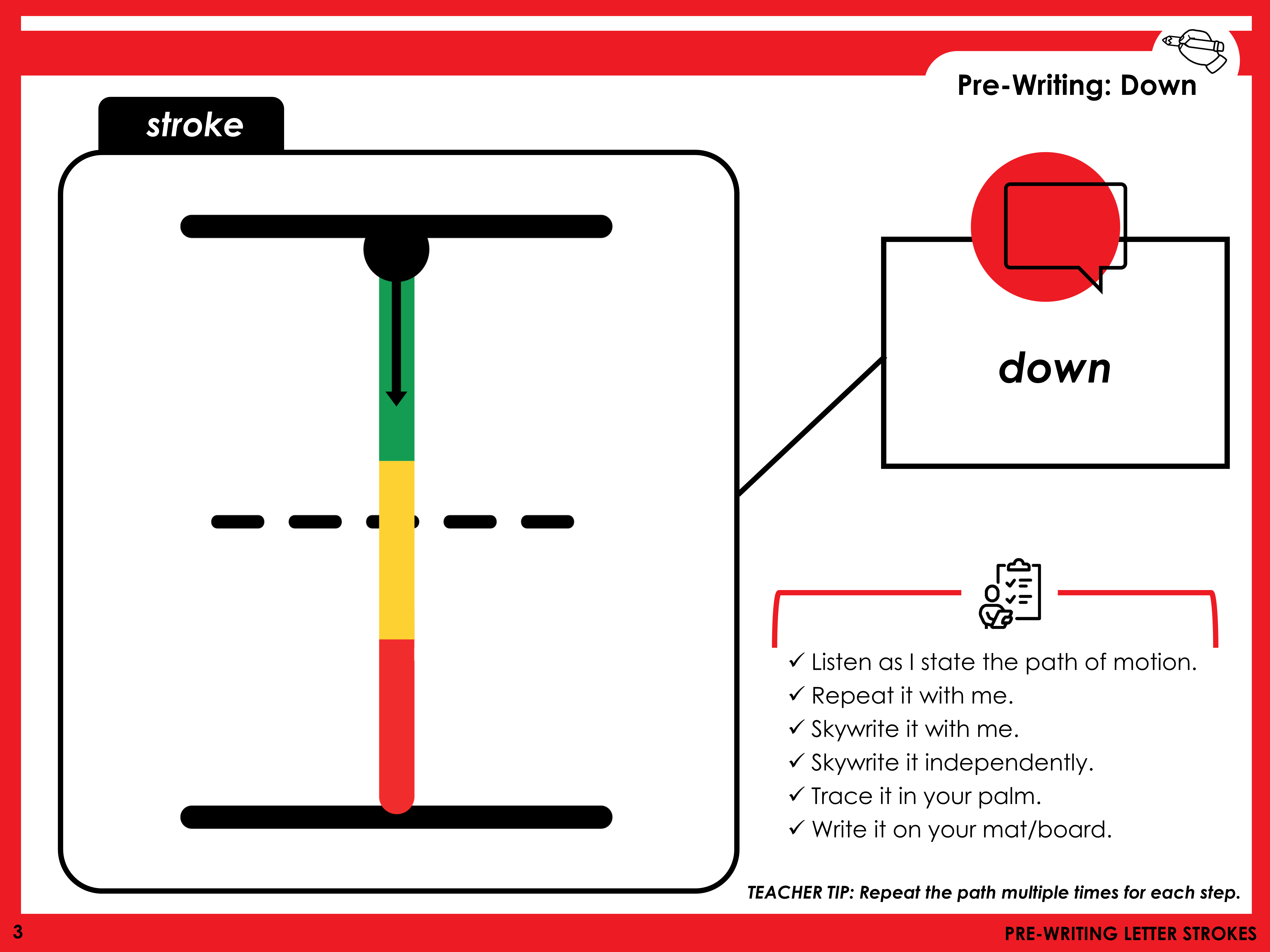
Rather than immediately jumping into handwriting practice, these interactive slides allow students to focus on the individual movements that make up nearly every lowercase letter. Students practice strokes like down, up, over, around, curve, and slant while also learning the consistent vocabulary they'll hear throughout future handwriting lessons. The slides also provide you with warm-ups.
That consistent language becomes incredibly powerful. Instead of constantly explaining where to move the pencil next, you'll find yourself using the same simple phrases over and over again. Before long, students begin using that vocabulary independently because the movements have become familiar.
These slides are also incredibly flexible. They can be displayed as a PDF, used in Google Slides, or downloaded into PowerPoint, making them easy to use regardless of the technology available in your classroom. I especially love using them as a whole-group warm-up before a phonics lesson. It only takes a few minutes, but those few minutes help establish movement patterns that students will continue using throughout the school year.
Whether you're teaching in a classroom, working with small intervention groups, or homeschooling, these slides provide an easy way to slow down handwriting instruction just enough to help students build confidence before they're expected to form complete letters.
👉 Download the FREE Pre-Writing Letter Strokes Digital Slides here.
Handwriting Free Downloads
The following free downloads pair with the free Pre-Writing Letter Strokes Digital Slides. Click the images to download.
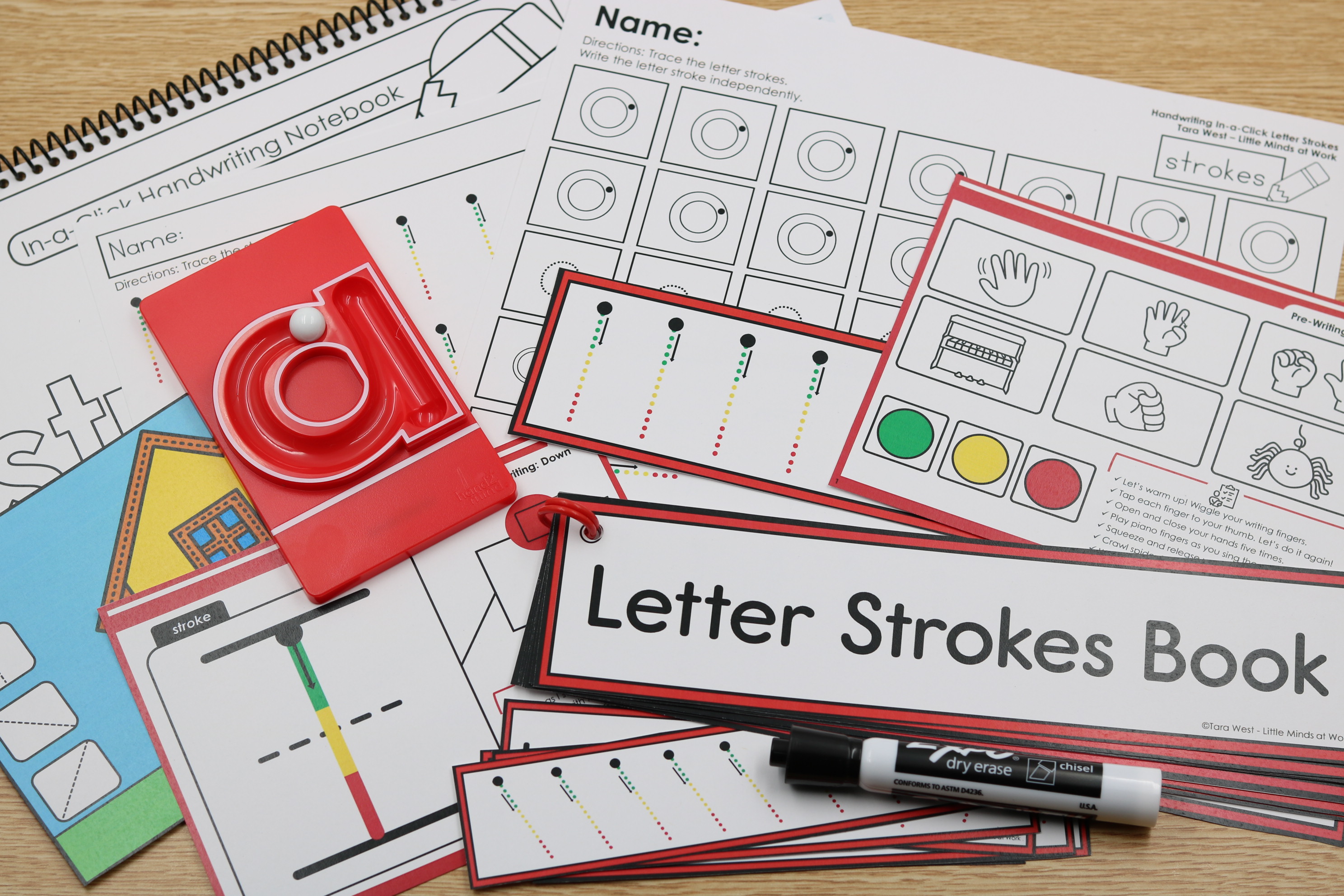
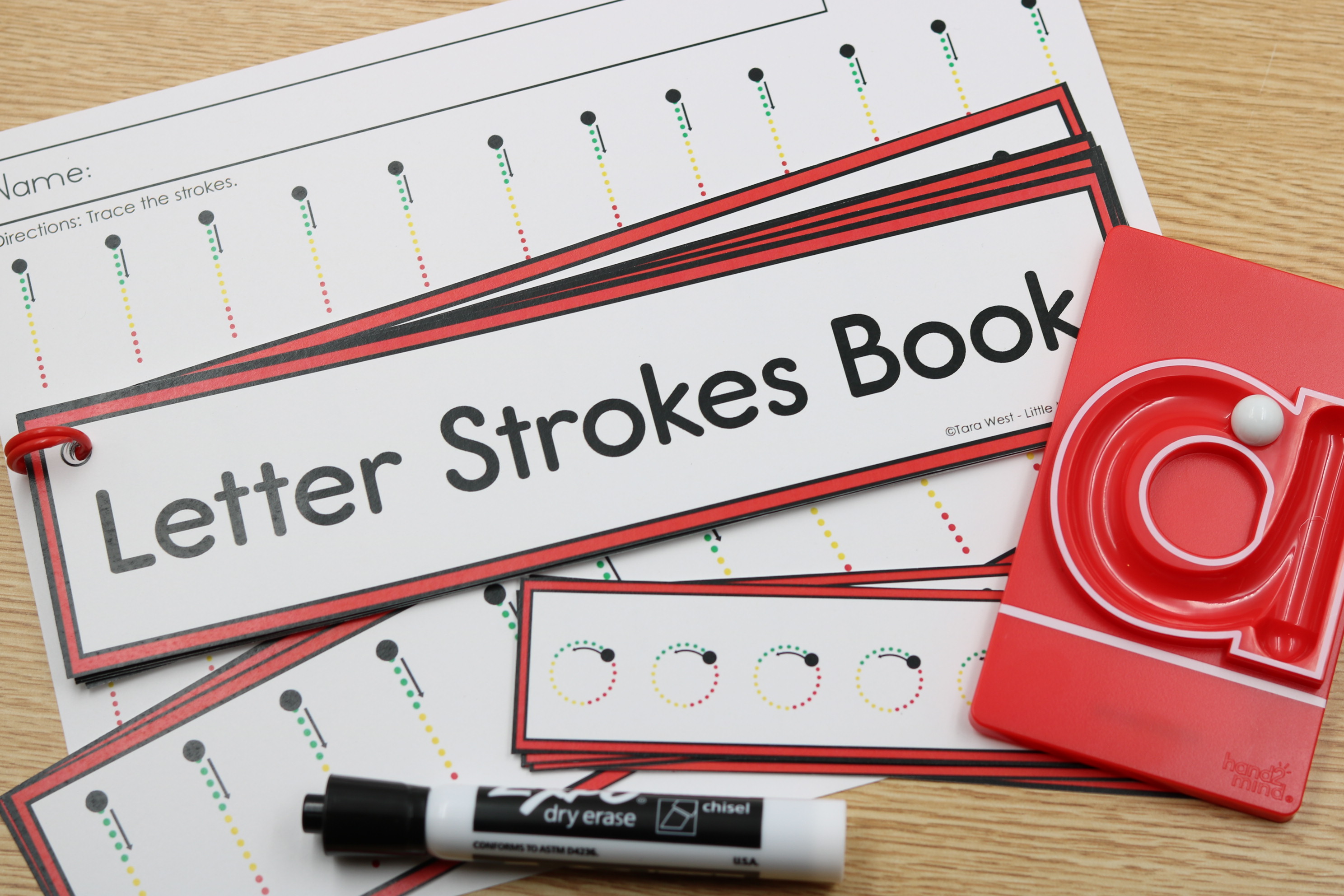
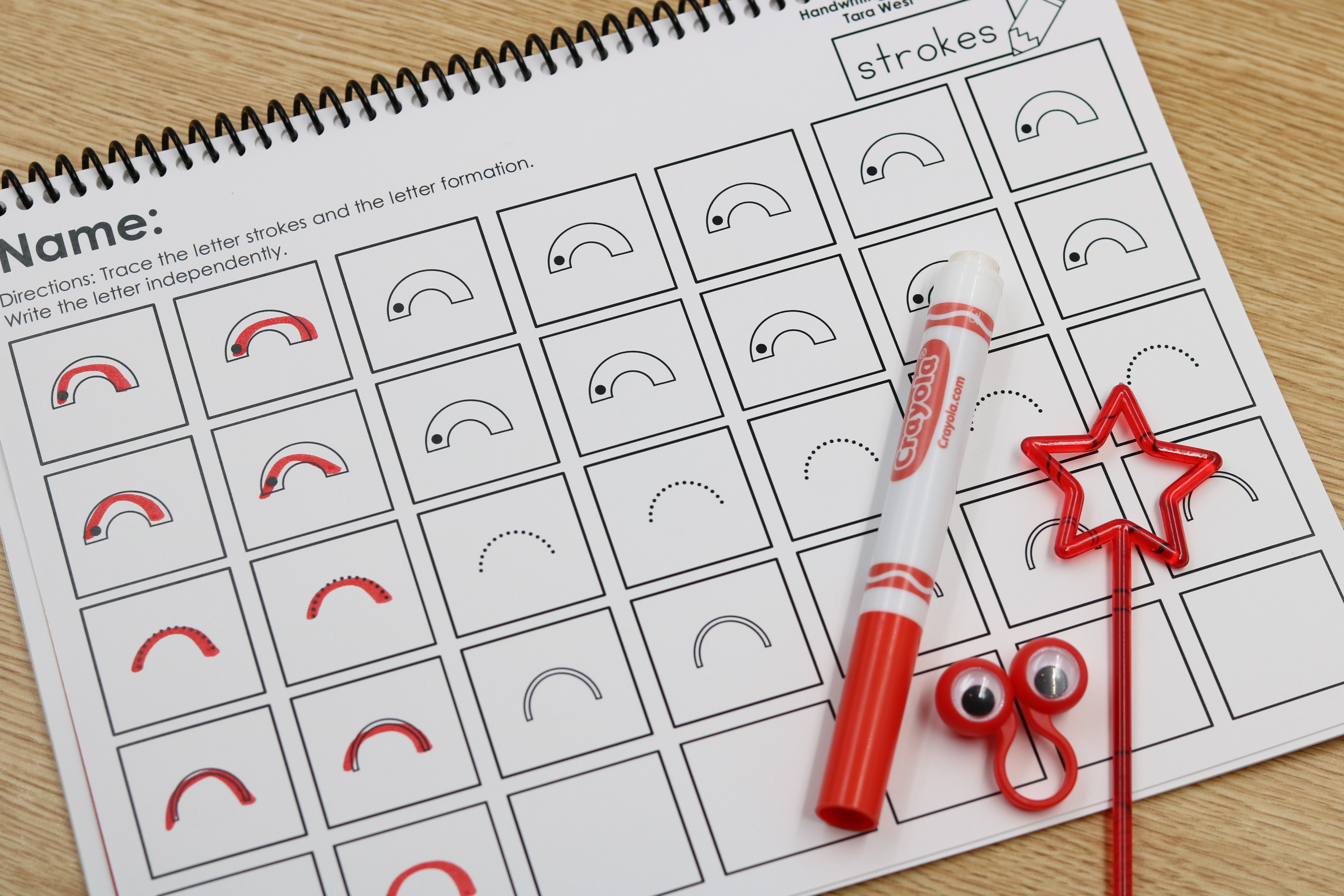
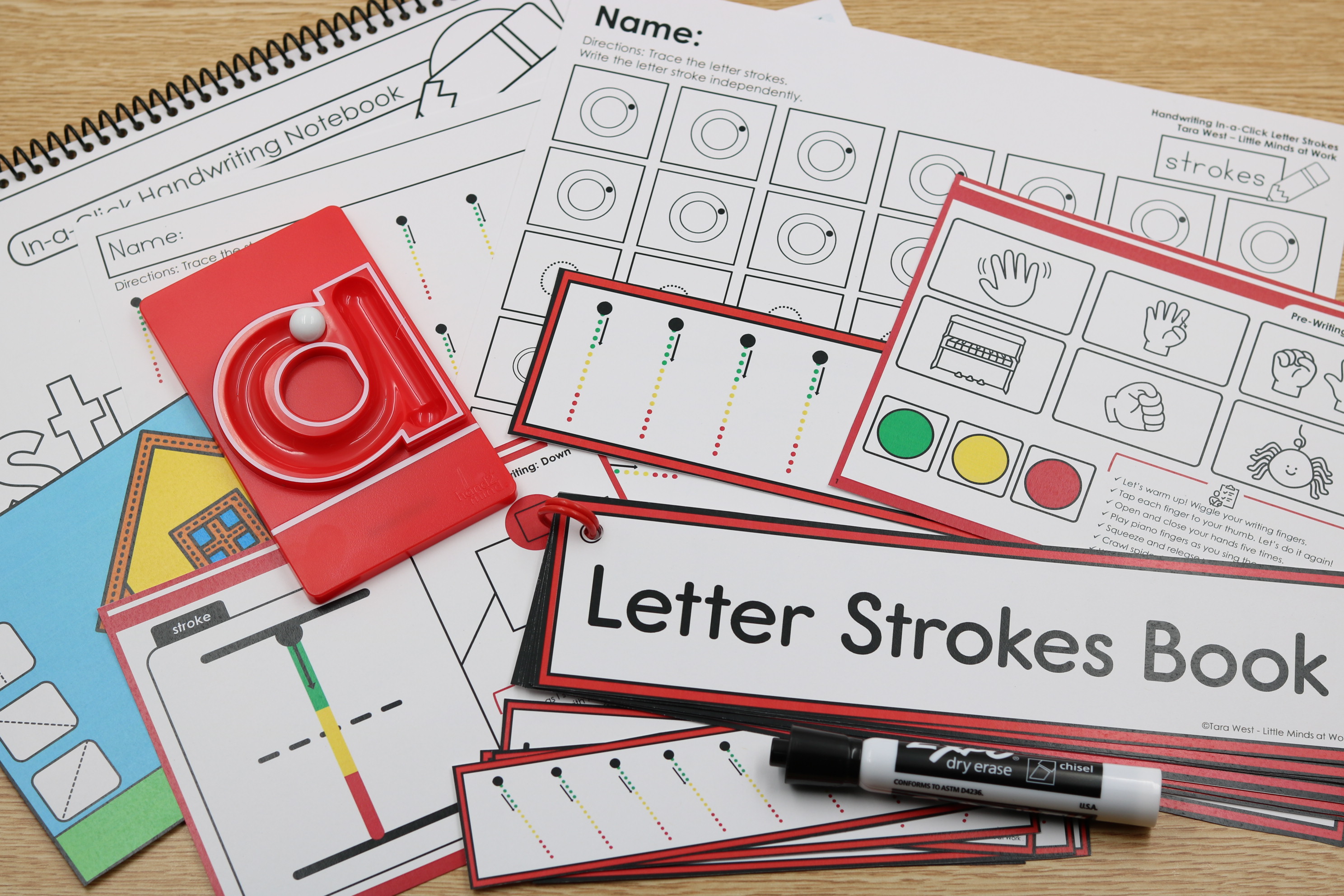
Pre-Writing Letter Strokes Book
Looking for a simple way to reinforce letter strokes throughout the week? This printable pre-writing book gives students repeated practice with each foundational stroke and can be laminated for dry-erase practice or assembled into an independent handwriting book. It's an easy addition to literacy centers, morning work, or small-group instruction.
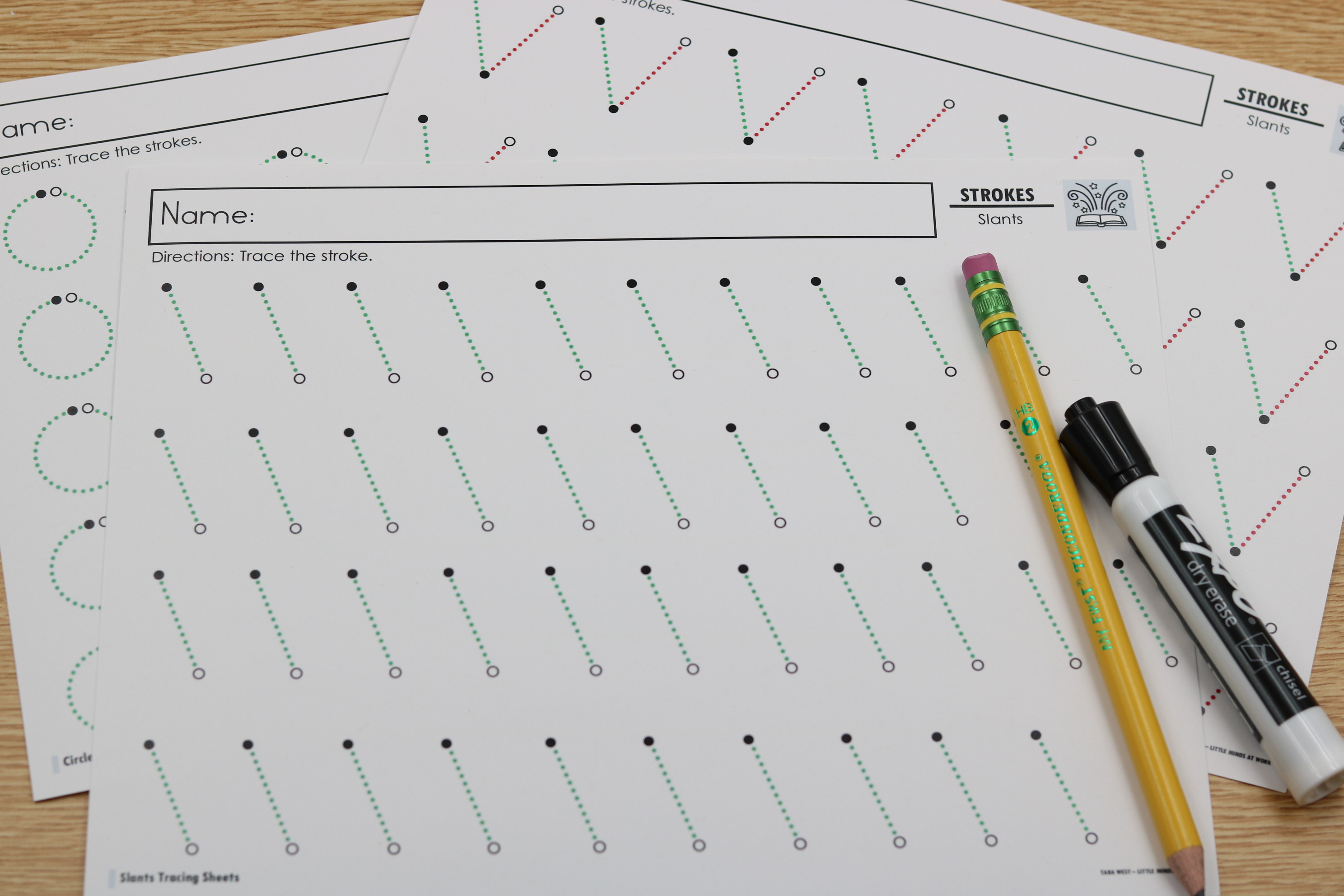
Pre-Writing Letter Stroke Practice
These printable stroke practice pages provide additional opportunities for students to strengthen the movements behind handwriting before introducing complete letters. They're perfect for independent practice, intervention groups, take-home activities, or quick handwriting warm-ups that reinforce the same stroke vocabulary used during instruction.
Handwriting Starts with the Whole Body
One of the biggest mistakes we make with handwriting is assuming it begins when students sit down with a pencil. It doesn't. Handwriting begins long before students ever touch paper.
Before children can successfully control the small muscles in their hands, they first need opportunities to develop larger body movements. This follows a developmental principle known as proximal-to-distal development, meaning children typically gain control of the larger muscles in their shoulders and arms before developing the refined control needed in their hands and fingers. In other words, gross motor development lays the foundation for fine motor development.
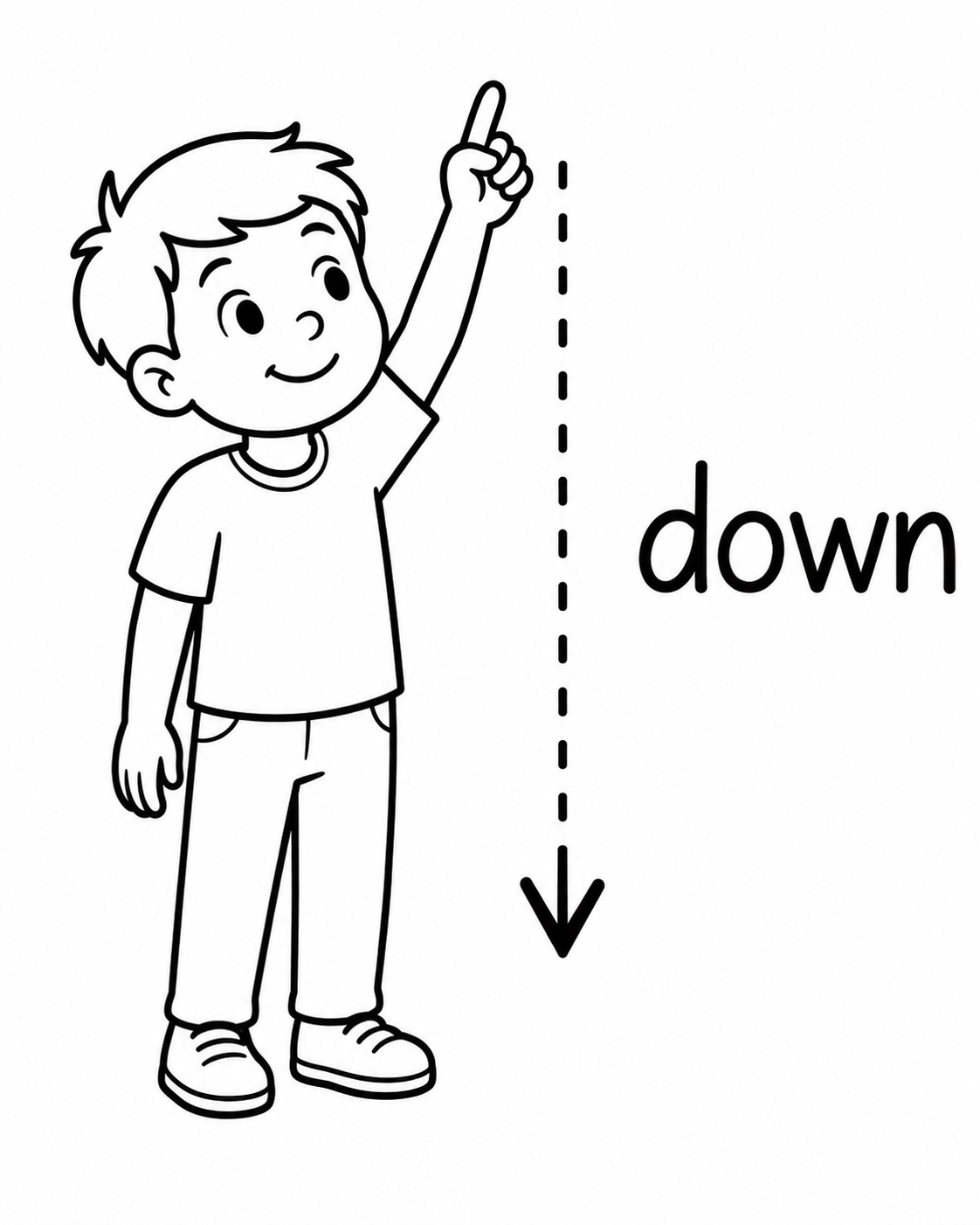
Think about the language we use when teaching handwriting. "Go down." "Go over." "Go around." Those directions seem obvious to us because we've been writing for years. But imagine hearing those words for the very first time while looking at a tiny handwriting line on a piece of paper. What does down actually feel like? What does over mean? How big is around? Those movements become much more meaningful when students experience them with their entire bodies before shrinking them down to a pencil-sized motion.
One of my favorite ways to introduce new letter strokes is through large gross motor movement. Have students stand beside their desks and skywrite each stroke together. As you say, "Down," everyone moves their entire arm downward. As you say, "Over," students sweep their arm across their body. "Around" becomes a large circular movement they can actually feel.
Suddenly, those words aren't just directions anymore. They're movements students have experienced.
Once students understand the movement with their whole body, it's much easier to transfer that same pattern to a marker, crayon, or pencil.
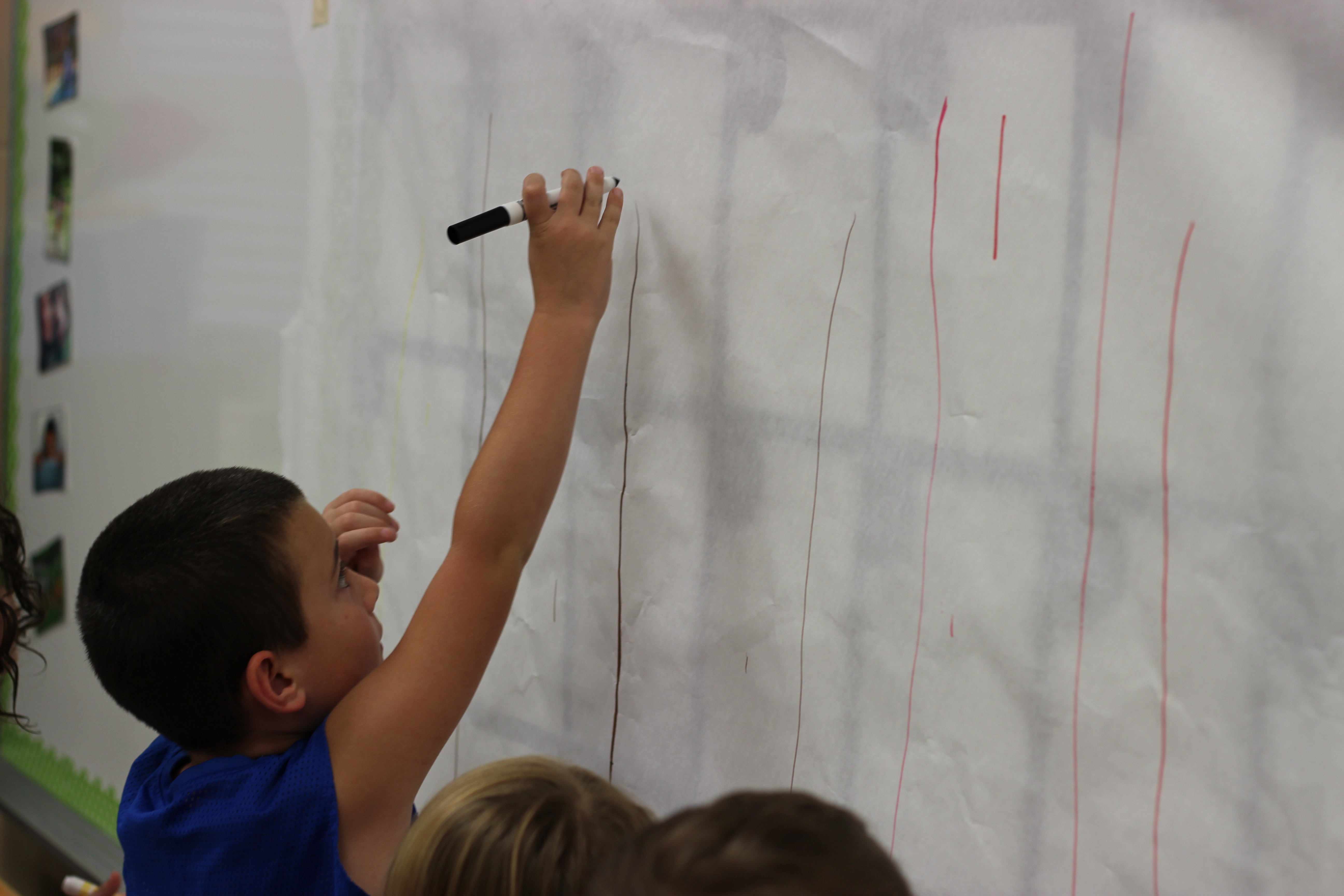
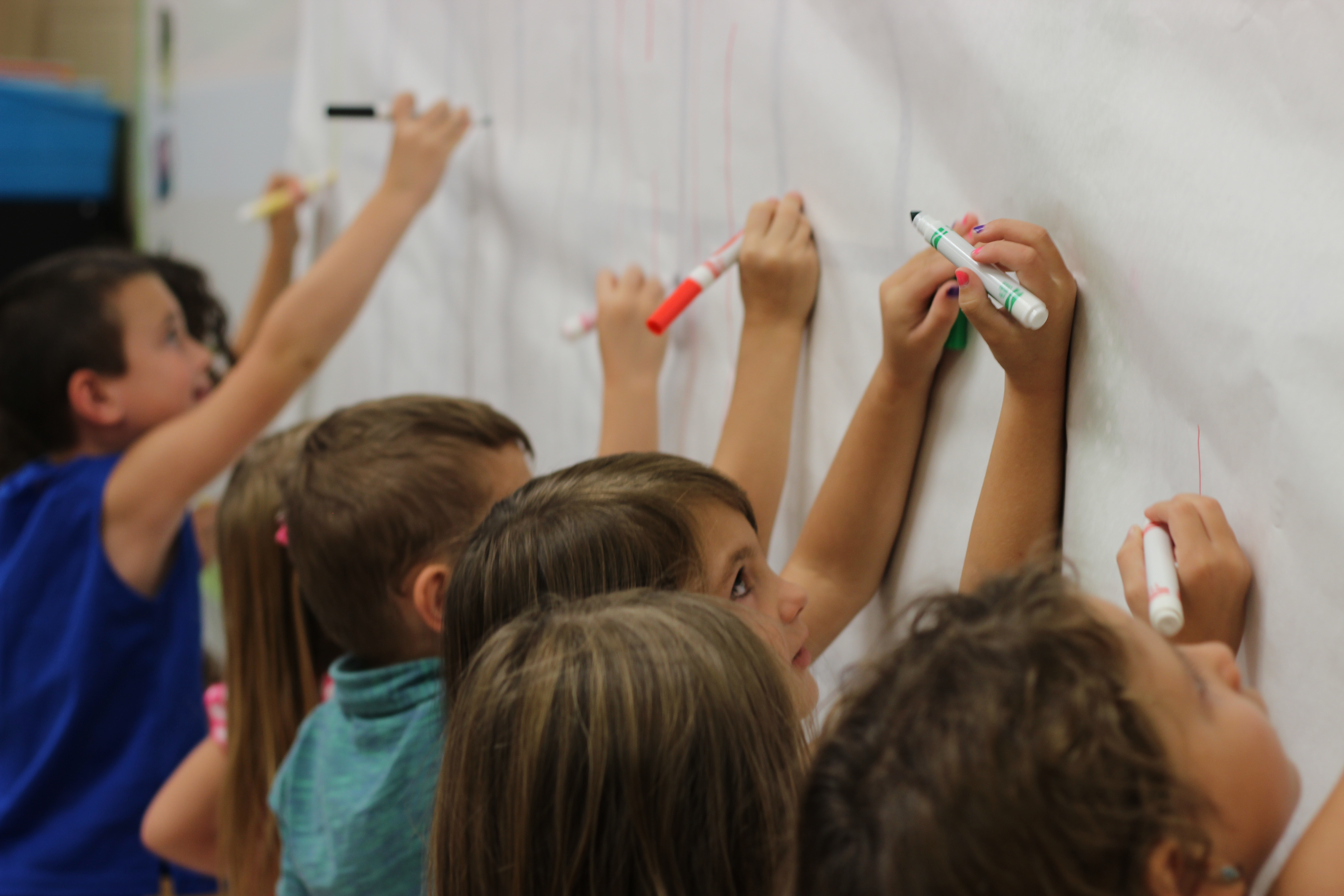
This is also why I encourage teachers to think beyond traditional handwriting paper. Give students opportunities to make large movements before expecting tiny ones.
Some of my favorite ways to practice pre-writing letter strokes include:
[] Hanging butcher paper on a wall so students can write while standing.
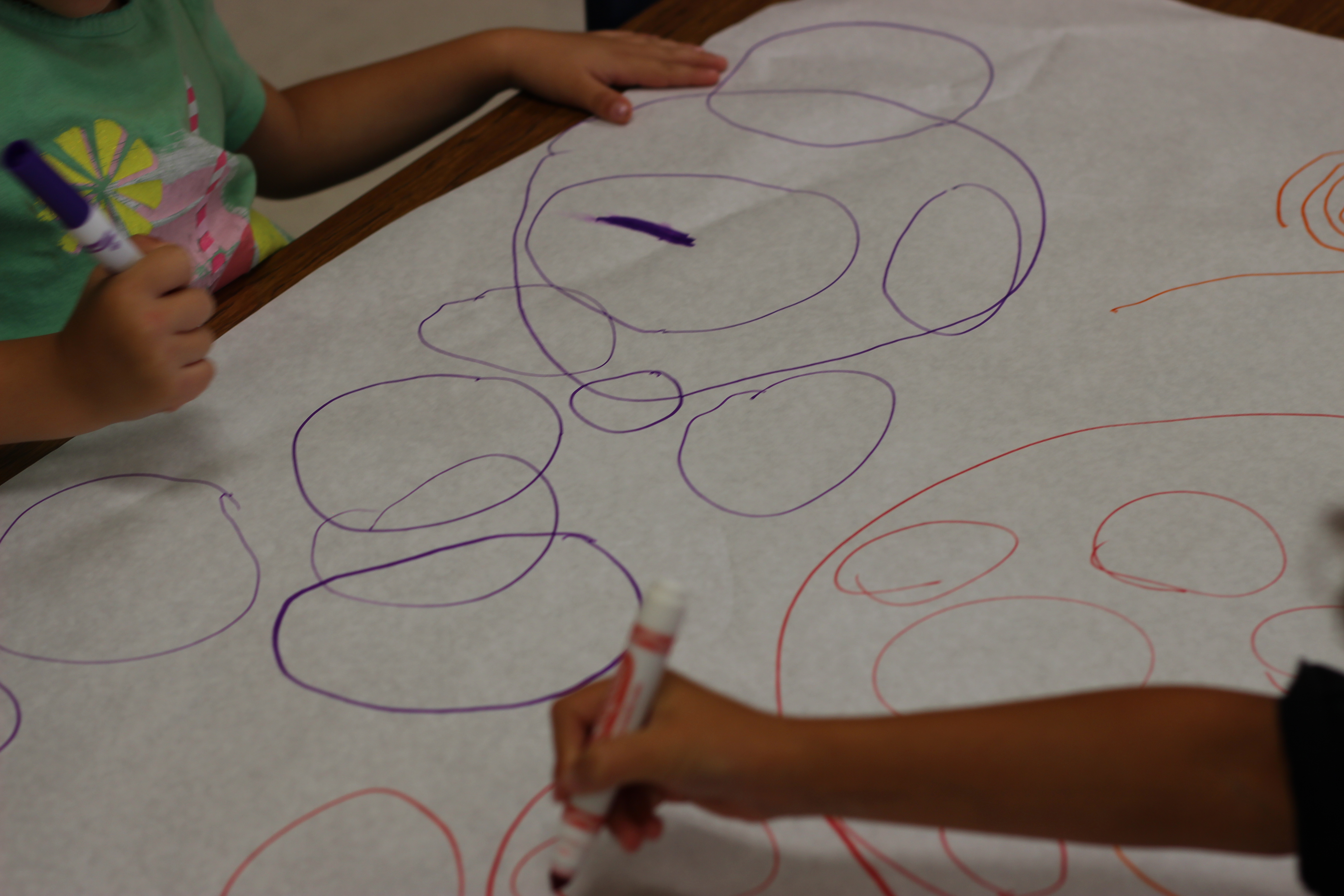
[] Covering a table with butcher paper and practicing large circles, lines, and curves together.
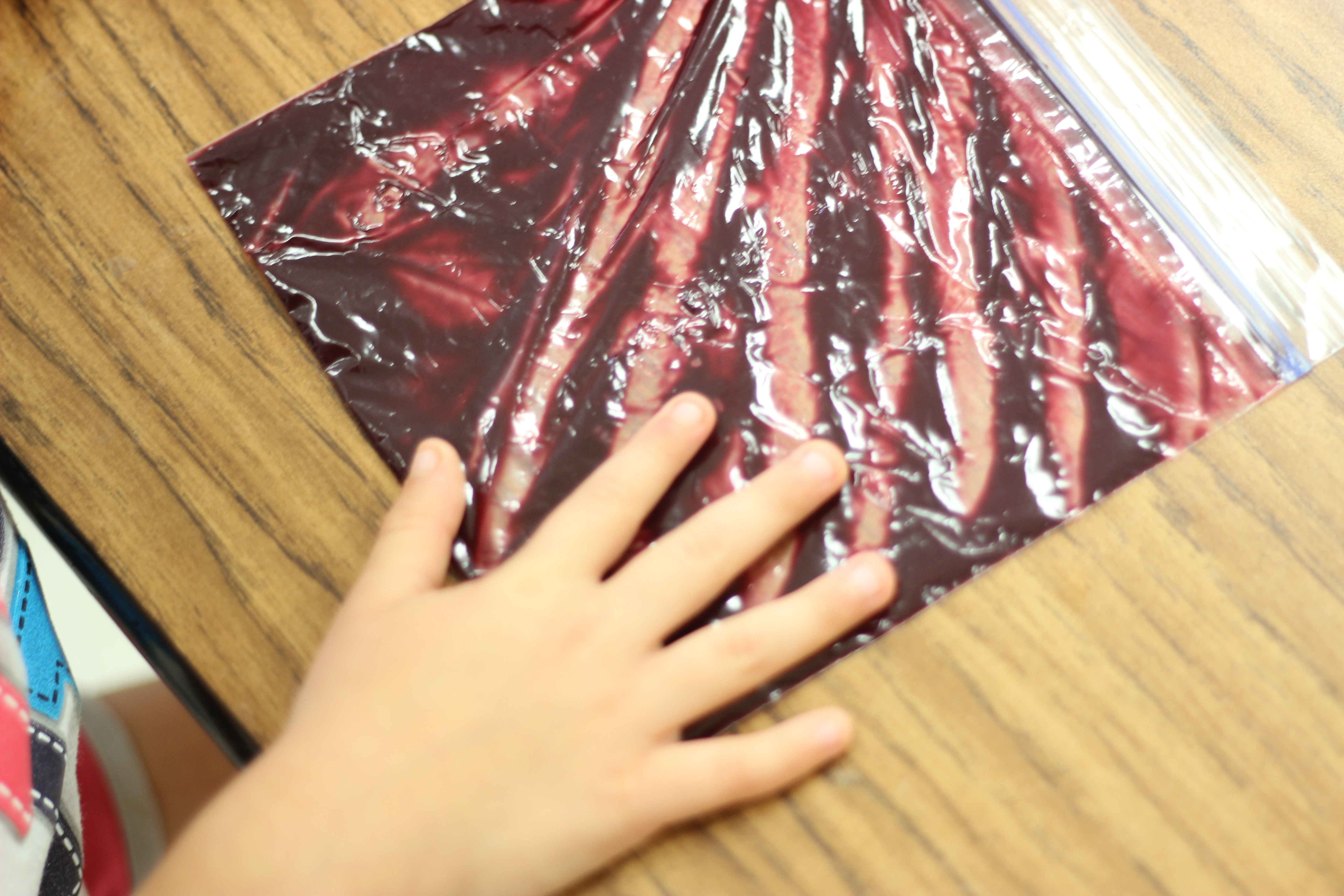
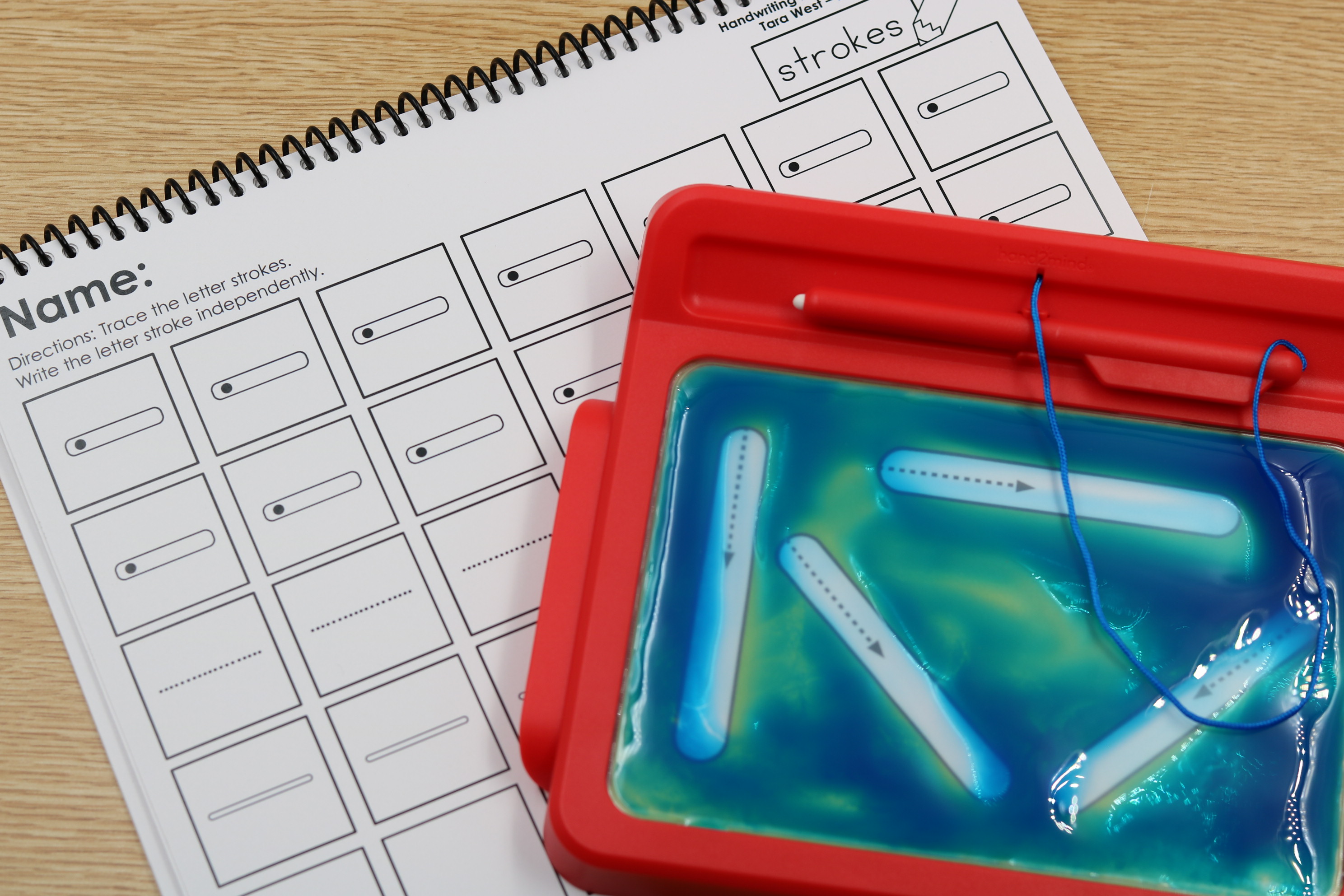
[] Tracing strokes in sensory gel bags.
[] Using tactile tools that encourage students to physically feel each movement as they trace.
The larger the movement, the easier it often becomes for students to understand the direction. Once those movement patterns are established, reducing them to a handwriting line becomes much more natural.
Handwriting Digital Slides
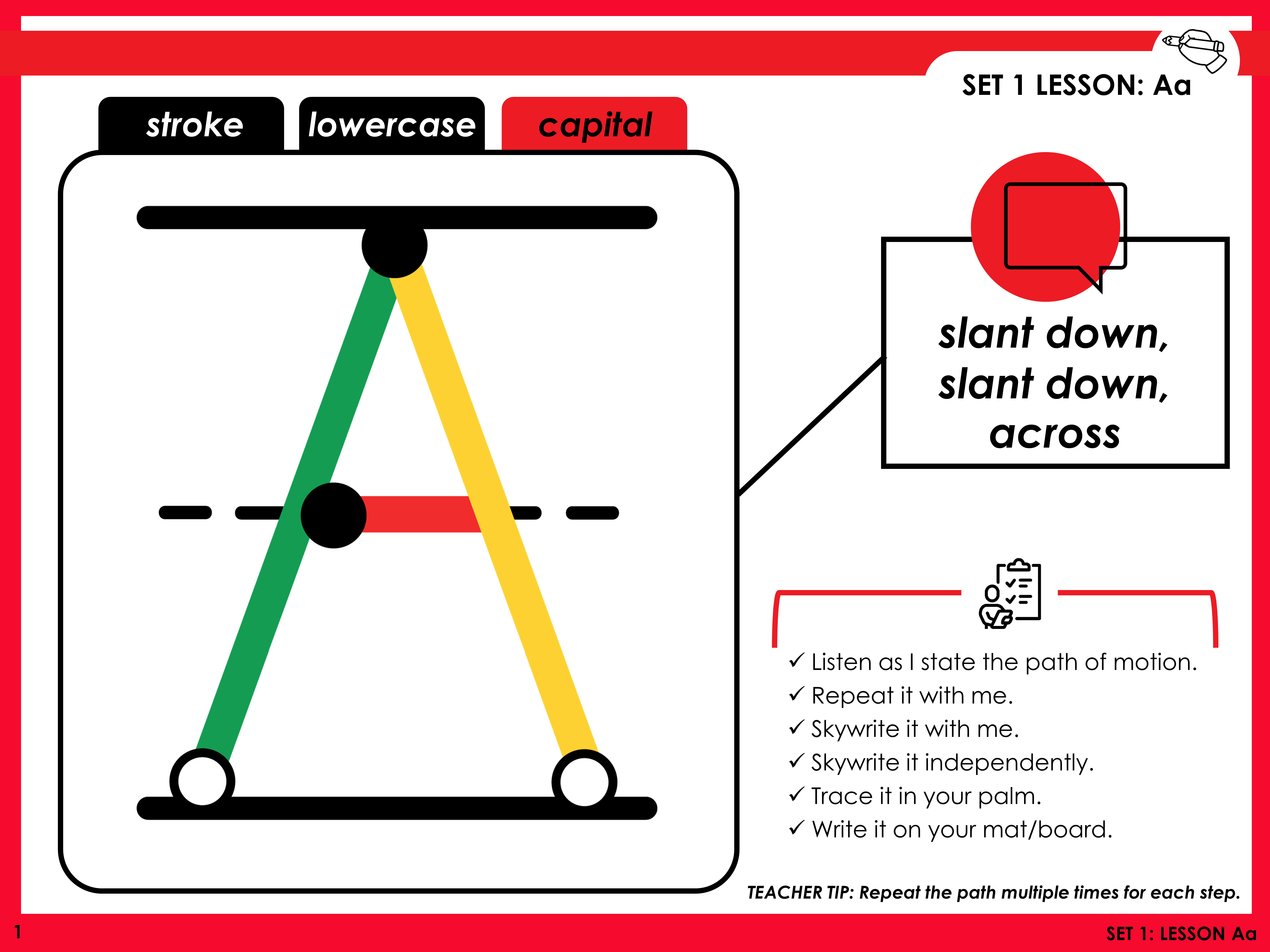
Continue building correct letter formation with explicit, interactive handwriting lessons that use the same consistent stroke language students have already learned. These whole-group teaching slides walk students through every lowercase letter using color-coded stroke sequences, making it easy to connect pre-writing strokes to complete letter formation. Click on the image to view the resources on Amazon.
Bring Letter Strokes to Life with Hands-On Learning
Children learn best when they can see it, say it, and feel it. Once students understand the basic movements through gross motor practice, it's time to reinforce those same strokes with engaging, hands-on experiences. These tools give students repeated opportunities to build muscle memory while making handwriting practice feel more like play than work. Disclosure: As an Amazon Associate, I earn from qualifying purchases at no additional cost to you. Thank you for supporting Little Minds at Work!
hand2mind® Letter Tracing Sensory Pad
Students can trace each stroke with their finger as they build confidence through tactile, multisensory practice. The raised pathways encourage slow, intentional movements while helping students connect the language of each stroke to the physical motion of writing.
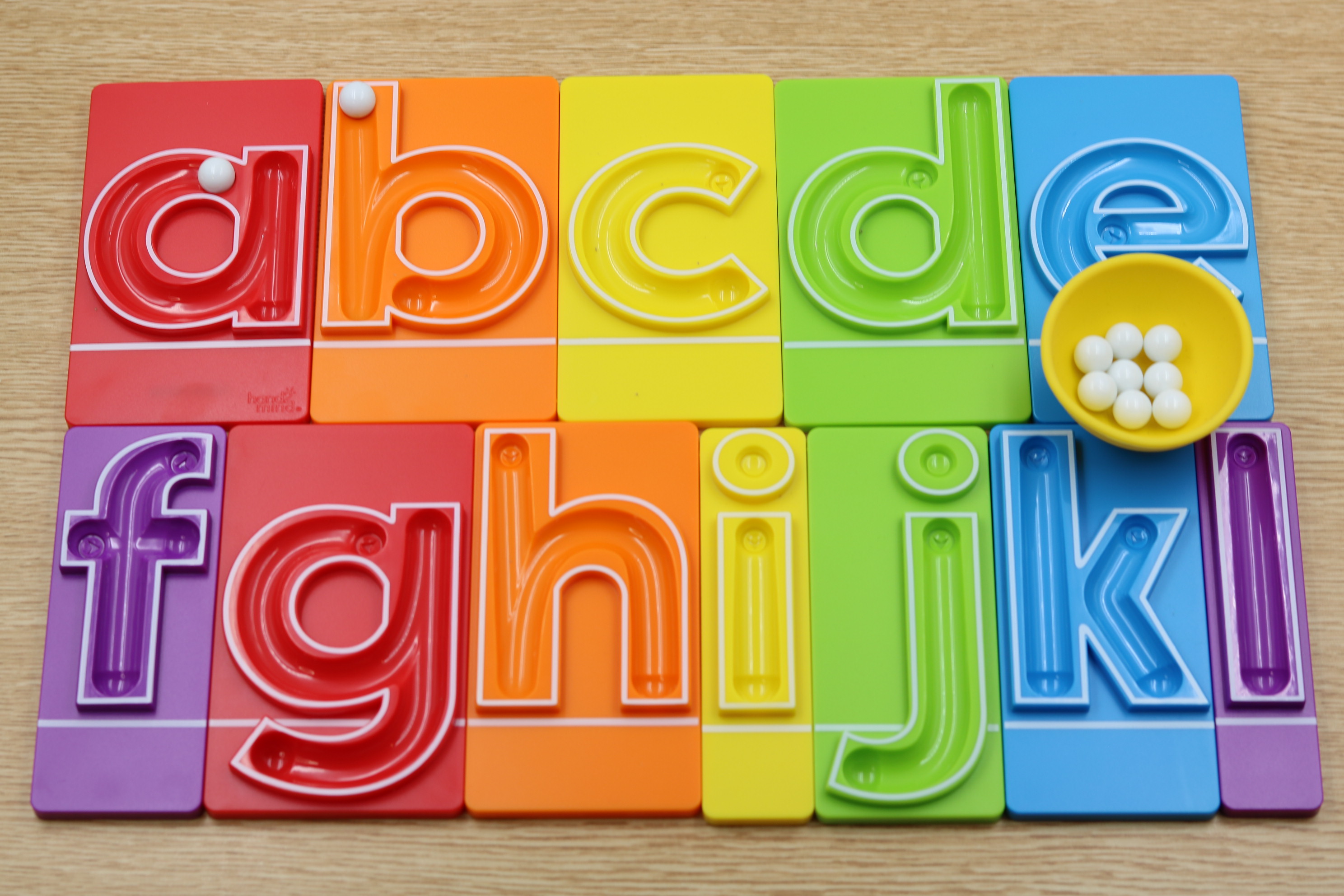
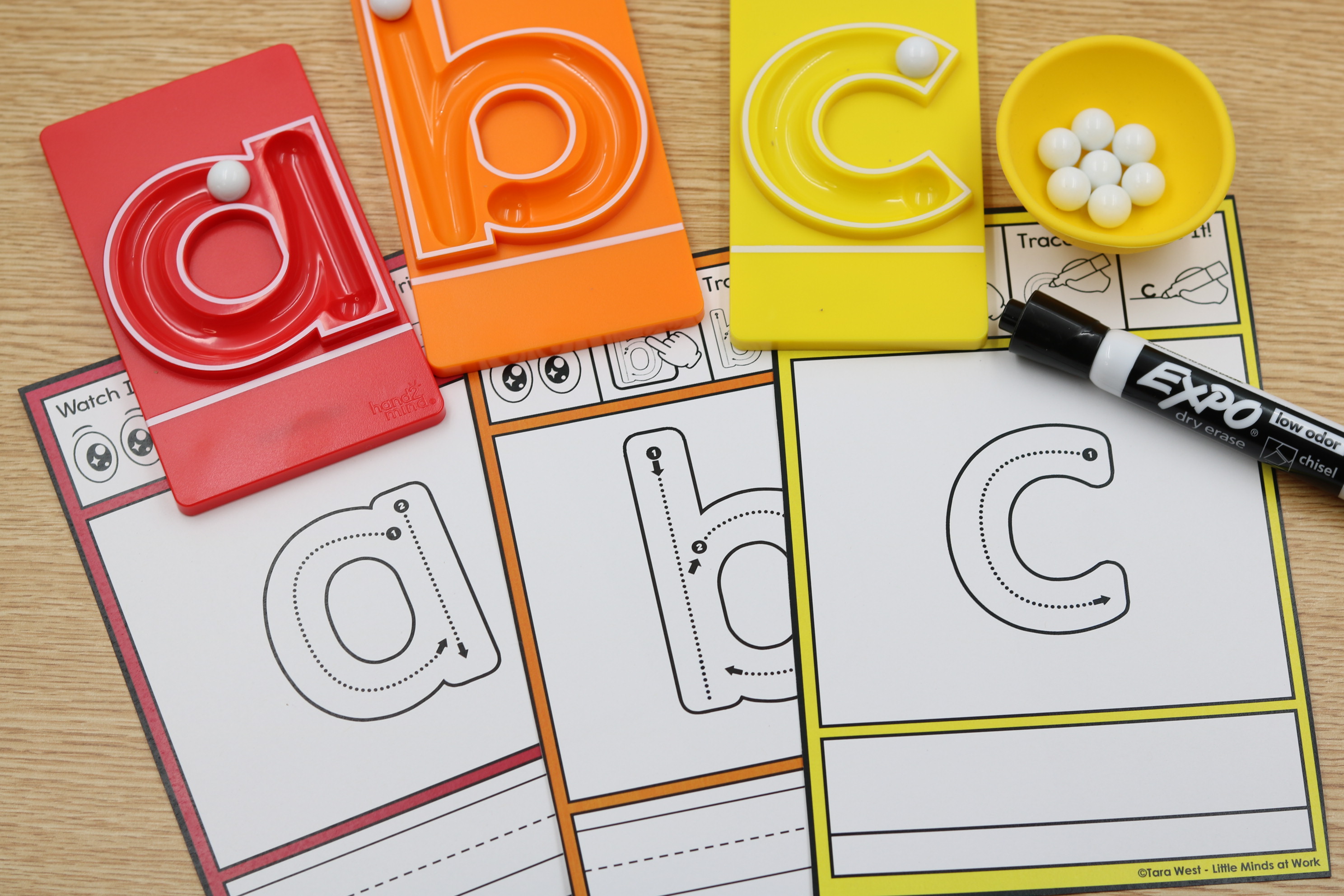
MarbleTracers® Lowercase Letters
After students understand the foundational strokes, MarbleTracers provide a fun way to apply those same movements while learning lowercase letter formation. As students guide the marble through each pathway, they naturally reinforce the strokes that build each letter.
More FREE Letter Stroke Resources
The more opportunities students have to practice foundational letter strokes, the more confident they'll become when it's time to write complete letters. These additional freebies are perfect for extending learning during centers, small groups, independent practice, or at home. Click on the images below to access each free download.
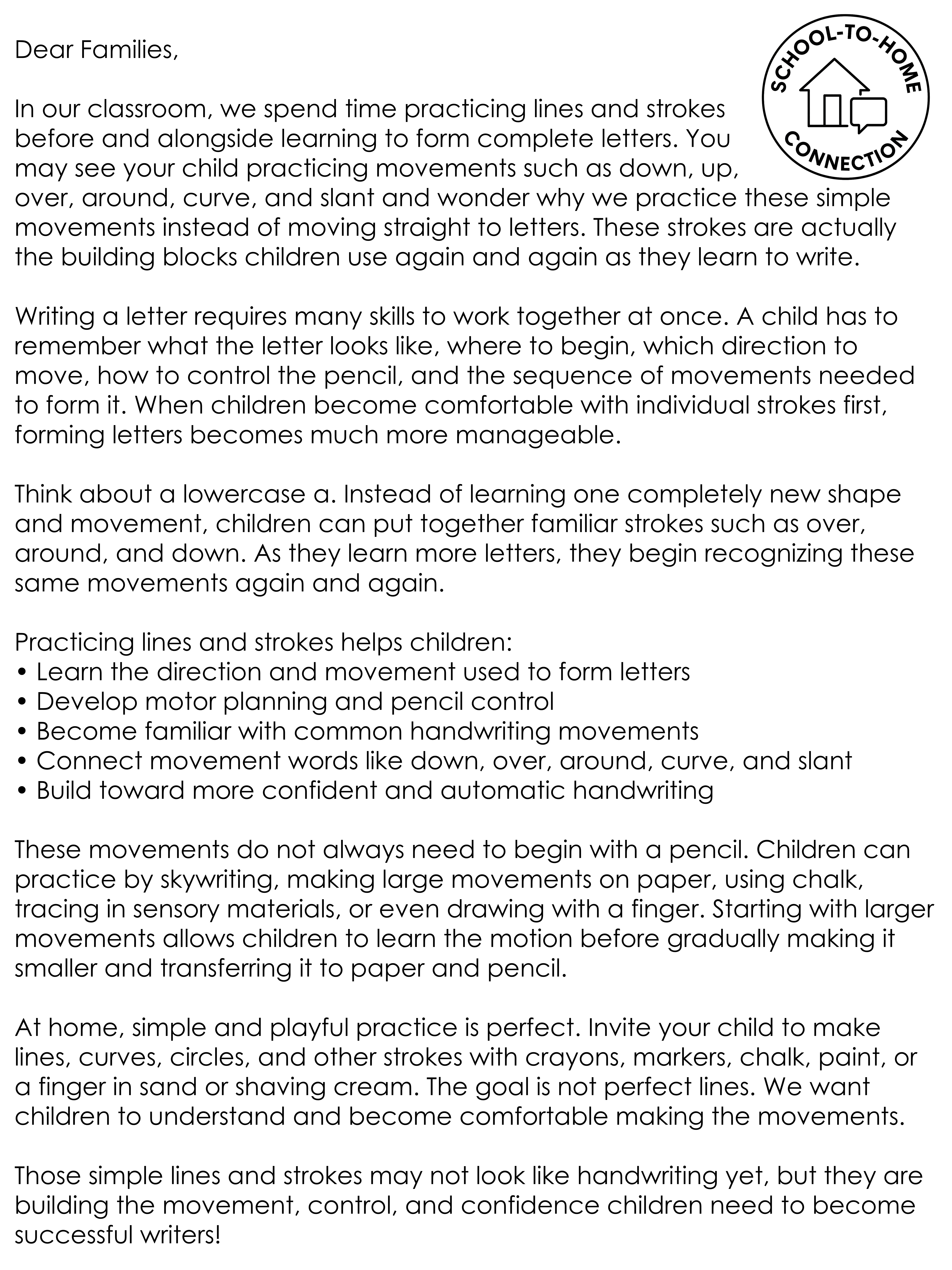
Help families understand why lines and strokes come before and alongside letter formation with this free Writing Strokes School-to-Home Connection! This parent-friendly note explains how movements like down, up, over, around, curve, and slant build the foundation for successful handwriting.
FREE MarbleTracer Lowercase Letter Cards
Pair these FREE printable cards with the hand2mind® MarbleTracers Lowercase Letters for an engaging, hands-on way to reinforce correct letter formation. Students will strengthen the same foundational strokes while building confidence with lowercase letters through tactile, multisensory practice.
FREE Alphabet Letter Strokes Printable
Introduce and reinforce the foundational strokes that build lowercase letters with this FREE printable. It's a simple visual reference for teaching common stroke patterns and provides students with additional opportunities to recognize and practice the movements they'll use throughout handwriting instruction.
Even More FREE Letter Stroke Resources
Looking for even more ways to strengthen pre-writing skills? These additional freebies make it easy to continue practicing letter strokes throughout the school year. Whether you're planning whole-group lessons, literacy centers, intervention, or independent practice, there's something here for every classroom. Click on the images to download each freebie.
FREE Alphabet Letter Strokes
Introduce and reinforce the foundational strokes used to build lowercase letters. This printable is perfect for modeling, reviewing, and helping students recognize the common movements they'll use again and again.
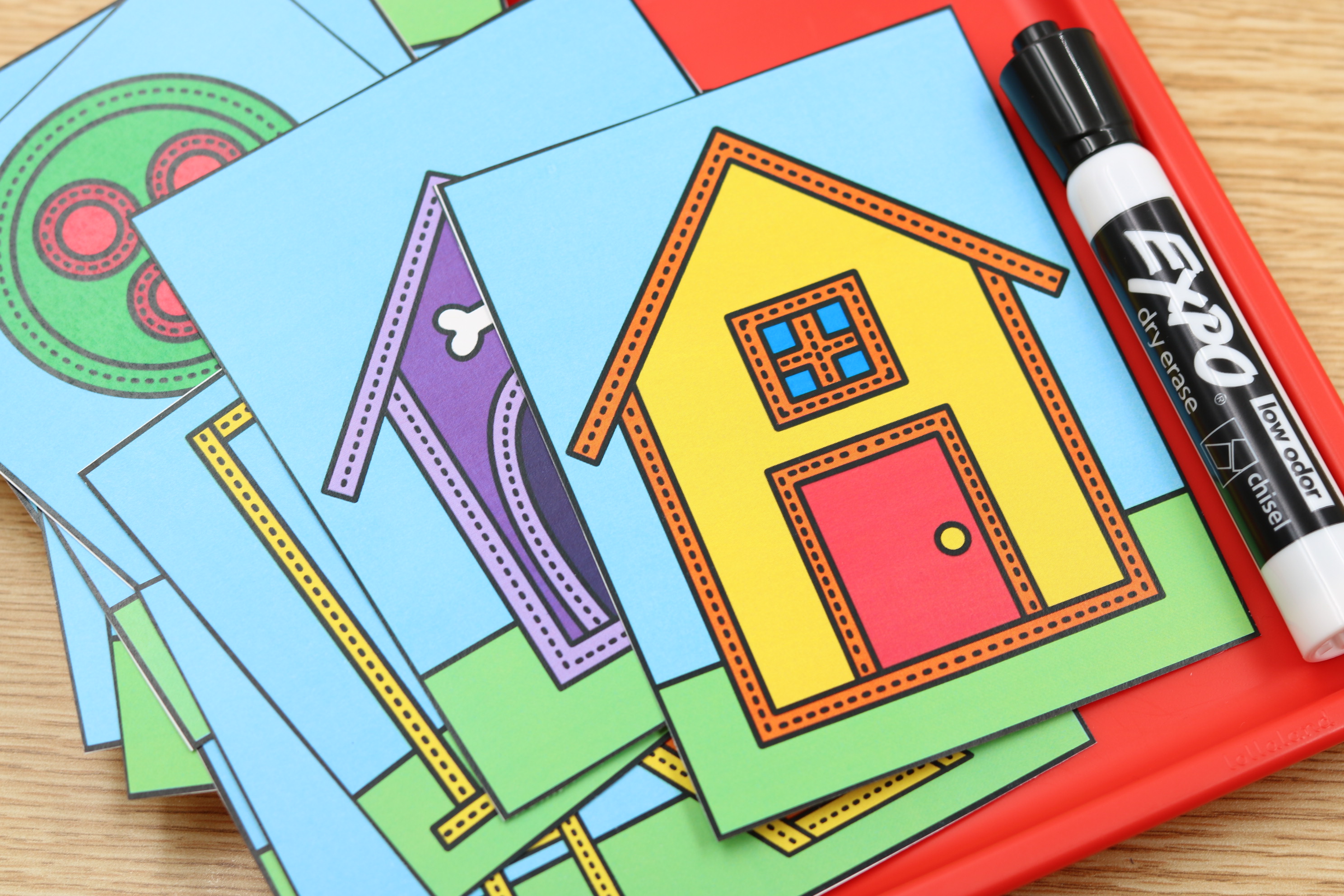
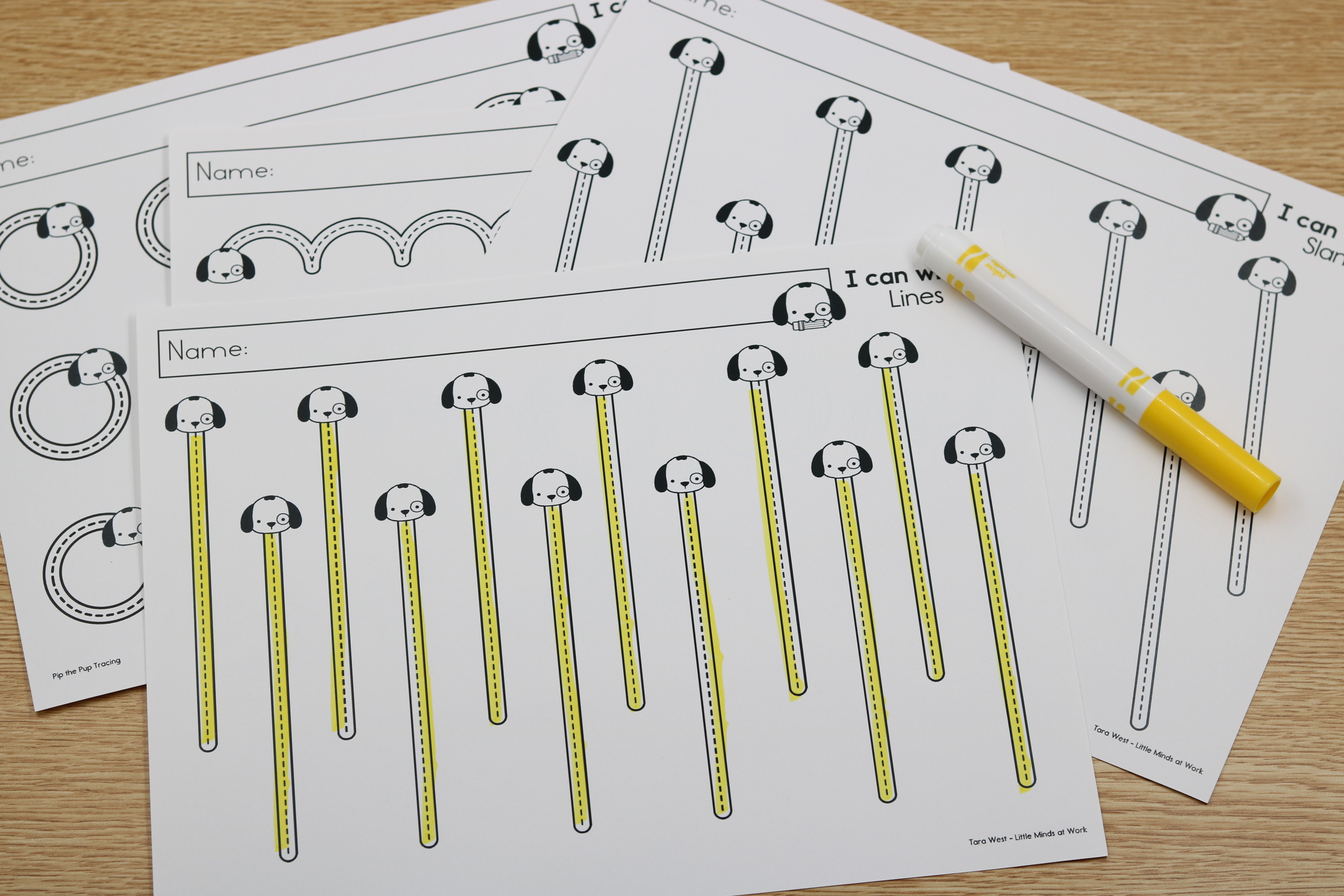
FREE Pip the Pup Stroke Tracing
Practice pre-writing strokes alongside Pip the Pup! These engaging tracing activities help students build confidence while reinforcing the same movement patterns taught throughout your handwriting instruction.
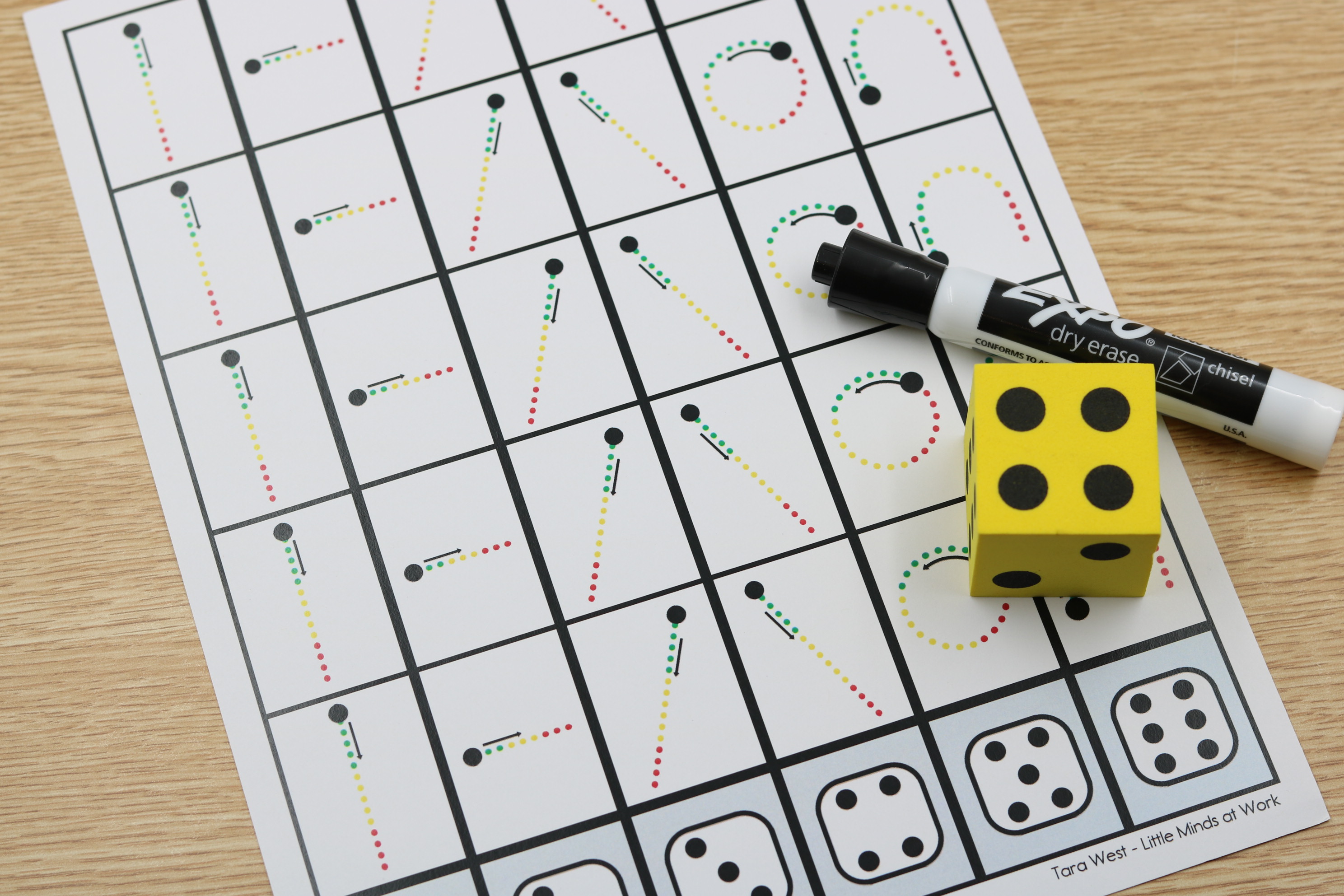
Make pre-writing practice hands-on with this free Pre-Writing Strokes Roll and Trace activity! Students roll a die, find the matching column, and trace the stroke while building pencil control, motor planning, and handwriting readiness.
Strong Handwriting Starts Before the Letters
It's easy to think handwriting begins with teaching the alphabet, but the truth is that successful handwriting begins much earlier. When we intentionally teach the movements behind the letters first, we give students the confidence and foundation they need to become successful writers.
Whether you're introducing handwriting for the first time, strengthening intervention, or looking for new ways to support your youngest learners, taking a few extra minutes to focus on pre-writing letter strokes can make a lasting impact. Those simple movements—down, over, around, slant, and curve—become the building blocks students will rely on every time they pick up a pencil.
If you're ready to get started, be sure to access all pre-writing letter strokes FREE downloads HERE. They're designed to help you confidently introduce handwriting one stroke at a time while making learning engaging, meaningful, and developmentally appropriate for every student.